


The Yukon Status of Women Council says other jurisdictions offer pro-choice counselling.
After Mimi Deacon had her abortion in February, she felt left without support. Not by her friends and family, but by medical staff and professionals in the Yukon.
Deacon is a social worker in Whitehorse; she had to terminate her pregnancy for medical reasons. She had a surgical abortion at Opal Clinic, the only provider in the territory. Months later, she posted about her experience on Facebook and heard from others who echoed her frustrations about a lack of Yukon-specific support.
In the end, Deacon accessed resources based out of British Columbia but never found any local options — because there aren’t any.
Sigourny Whipple-Grantham said other clinics in Canada have in-house social workers, or contracts with local counselling organizations that they can refer people to. Whipple-Grantham is the reproductive justice project coordinator at the Yukon Status of Women Council in Whitehorse. “It’s pretty standard to have those supports integrated,” she said. “I think it’s important for us to catch up to the rest of Canada in that sense.”
In September, the Yukon Status of Women Council published a report on access to abortion in the territory. More than 100 people completed a voluntary survey, open to those who have experienced abortion, and those who haven’t.
Participants, whose comments were shared anonymously, wrote about what they would have wanted during their experience with abortion. One of the most common wishes was access to free, pro-choice counselling.
“It would have helped me to have someone to talk to before or after about it. To know what to expect; to know how women feel about it, how they grieve,” one person wrote.
In the territory, there is rapid-access counselling through Mental Health and Wellness that’s available to all Yukoners, but not abortion-specific, said Justine Fair. Fair is a doctor specializing in women’s health at the Whitehorse General Hospital. There are also abortion-specific and sexual health hotlines people can access, “but these are not in-person and they’re not Yukon-specific,” Fair said. For emotional support, Fair thinks there’s room for improvement.
“Something that those of us who work in women’s health would like to see is more dedicated, free, certainly pro-choice counselling resources. Both for making the decision, but also for those people who need it after their abortion.” The barriers to making that happen, Fair said, are funding and space. The Opal Clinic is located inside Whitehorse General Hospital, and Fair said there’s no room or money to add someone to the team.
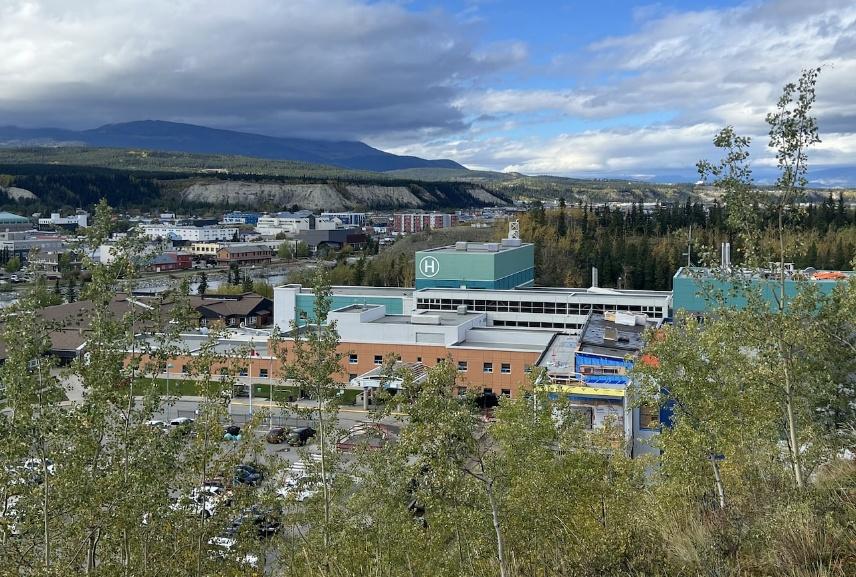
The Opal Clinic is located in the Whitehorse General Hospital.
The clinic is the only abortion provider in the Yukon, and advocates
say more supports need to be in place for people who have
abortions in the territory. (Paul Tukker/CBC)
In the report, one survey participant shared that they “started to heal” from their experience after being able to share their story, and hearing their experience reflected back to them.
That’s part of Deacon’s impetus for sharing too. For her, the decision to have an abortion was laden with grief. “You can know that an abortion is the right choice for you and it can still be really hard and emotional. Our medical system doesn’t have space for that right now, I feel,” Deacon said.
“There was no world in which I could imagine not talking about that experience because it was so profound, and it took up so much space for such a long time.” she said.
SOURCE: by Isabel Ruitenbeek, CBC News, 27 October 2026.