


How the major parties are politicising abortion care ahead of the state election.
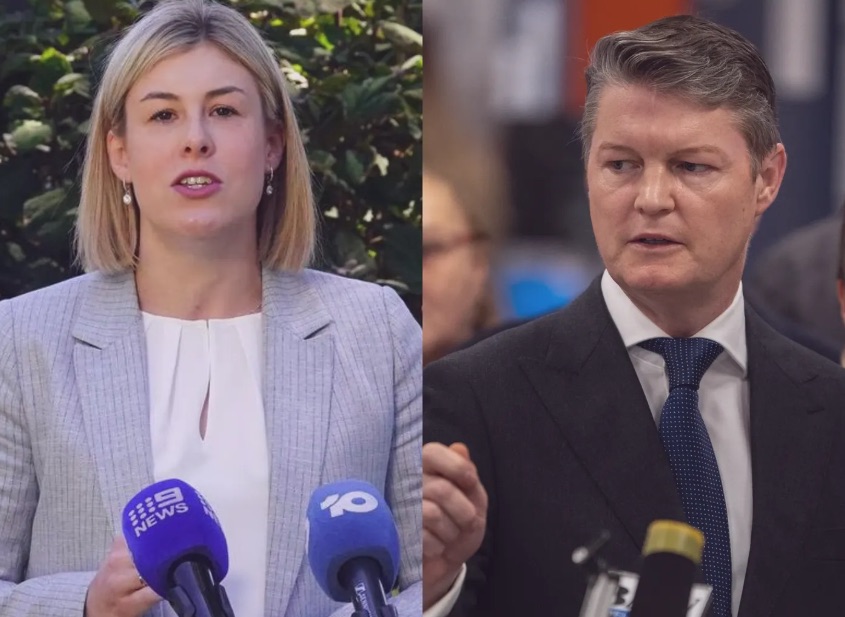
The very same day as criticising Victorian Premier Ben Carroll for “[playing] political football with women’s reproductive rights”, opposition leader Jess Wilson matched Labor’s commitment to to eliminate out-of-pocket costs for abortion care. But the politics behind the policy makes a milestone win from women’s health feel empty, writes Varsha Yajman.
In Australia, Medicare currently covers some abortion procedure costs. But it still leaves many women owing hundreds of dollars for blood tests, scans and other screening, plus medication, with women living regionally facing additional travel costs.
For decades, abortion advocates have been campaigning for free access to abortion and increased access for those in rural areas. But little did we know that free abortion would be turned into a political pawn in the Victorian state election.
Labor and Liberal Nationals are playing with women’s autonomy and health.
On 15 October, just six weeks before the state election, the Victorian Labor Party committed $30 million over four years to eliminate out-of-pocket costs for abortion care. Under Labor’s plan, participating private providers would be paid to deliver medical and surgical abortions up to 16 weeks’ gestation. In addition, women living in regional Victoria will be eligible for a travel subsidy, given the distance they must travel to a clinic.
The state’s health minister, Ingrid Stitt, said more than two-thirds of Victorians accessing abortion paid out-of-pocket costs in the private system, with Labor estimating its new policy will save women at least $700.
In addition, Labor announced it would expand medical abortion access – involving taking medication prescribed by your doctor – from nine to ten weeks’ gestation, and commission a clinical review into whether it could safely be offered at up to 12 weeks’ gestation.
Currently, medical abortion is subsidised through the Pharmaceutical Benefits Scheme for use up to nine weeks, but the World Health Organization’s guidance allows for up to 12.
Labor “decriminalised abortion and we will stand up for it”, Victorian Premier Ben Carroll said.
Carroll signalled his political intention as he announced the new policy, pointing to the threat posed by One Nation: “Let’s be very clear: you’ve seen the leader of One Nation very clearly say that he wants to roll back access to abortion. He wants to rob women of their right to choose their own future”. One Nation Victoria leader, Warren Pickering, has previously signalled intentions to roll back abortion access, which aligns with the party’s national platform. Though, in apparent response to growing political attention on the issue, the party’s deputy leader Colleen Harkin this week promised One Nation “will not touch the abortion laws” in the state.
Following Carroll’s announcement, opposition leader Jess Wilson told reporters, on the same day, “There will be no changes to abortion laws under a government I lead, and I just think it is incredibly disappointing to see Ben Carroll choosing to play political football with women’s reproductive rights”.
Wilson even described Carroll as a “coward” for not speaking publicly on the policy on Thursday.
“We are seeing an end of days government… a desperate government, and I think that Ben Carroll should be ashamed of himself”.
Yet, mere hours later, Wilson told Guardian Australia that a Liberal National Coalition government would match Labor’s commitment almost entirely, except for Labor’s commitment to extend access to medical abortion from nine to 10 weeks’ gestation or its plan to commission a clinical review.
“The Liberals and Nationals will not allow Labor to play politics on this issue,” she said. “Labor has had 12 years to improve access to healthcare but are instead choosing to play politics.”
Wilson has a point – the Labor government had 12 years, so why now?
Those in Victoria’s parliament, such as Animal Justice Party MP Georgie Purcell and Legalise Cannabis MP Rachel Payne, who have pushed for abortion care to be made free for years, have pointed to the tactical nature of this commitment, particularly by Labor, given they have been in government for 12 years.
Victorian Animal Justice Party MP Georgie Purcell took to Parliament in 2025 to highlight the difficulties those in Victoria face when accessing and affording abortions as she reflected on her personal experience.
“We are just asking the government to please listen to us”, Purcell said.
“We want to be able to access this care safely; we want to be able to afford this care, and right now that is just not possible, and it is scary.”
Speaking to the Victorian Labor Party’s announcement in the lead-up to the election, Purcell said it was an “opportunity to wedge a female opposition leader during an election campaign.”
“I can only presume there was some bloke who thought he was a genius behind that one,” she said.
In announcing the commitment, health minister Ingrid Stitt’s office pointed to polling showing that the Liberals required One Nation’s support to form government, claiming the minor party would make abortion “a criminal offence”. “Only Labor will protect a woman’s right to choose”, Stitt said.
It’s an approach that makes the whole policy proposal seems like a tactic, as opposed to genuine concern for its constituents.
And this is not the first time a state Labor government has used abortion to win votes. During Queensland’s 2024 state election, Steven Miles, the then Labor premier, warned voters that the Liberal National Party may allow abortion laws to be amended. While Labor did not win the election, some Party members attributed some of their wins to that messaging. Then, right after the Liberal National Party took office, Premier David Crisafulli passed what The Guardian called an “unprecedented gag” on the abortion debate, preventing any amendments to the abortion laws for four years.
Crisafulli claimed his motion ended a “disgraceful … US-style scare campaign”.
“I said from day one, it was not part of our plan,” Crisafulli said. “I said there will be no changes. And despite that – Labor knew this – and despite that, the social media tsunami, the grubby phone calls continued unabated. They spent millions of dollars on a disgraceful scare campaign.”
The upshot, was that the ban would stifle even progressive amendments to abortion law.
The bottom line
There is also an important caveat when it comes to looking at the practicalities of how this legislation will pass. Fair Agenda’s senior campaign manager, Amy Barrett, told Cheek that while they welcome the commitment by both parties to make abortion care in Victoria free early in pregnancy, that just because “the parties and their leader may back improved access to abortion care, they won’t stop any individual party members from voting to change the laws that protect our right to access it.”
“The past two years we have seen repeated attempts across states to change our laws and restrict access to abortion care with a particular focus on abortion later in pregnancy. We cannot be complacent. All it takes is one politician to bring a Private Member’s bill – and then both the ALP and the Coalition will allow their MPs a personal ‘conscience’ vote, and it will come down to where everyone stands individually,” Barrett said.
Given this, Barrett said that knowing where the person who votes for stands on abortion is just as important as knowing what the party they represent will fund.
The commitment from both parties means that regardless of who is elected on 28 November, abortion will be free in Victoria, becoming the first state in Australia to offer free universal access to abortion services, following the Australian Capital Territory, which began covering out-of-pocket costs in 2023.
This is ultimately a great outcome. However, as Purcell said, Labor should use the opposition support it has now and its “access to the public purse right now” to implement the policy immediately.