


by Dr Aparna Sridhar, Diya Shah Patel, Prof Helena Paro, Dr Margit Endle
In June 2026, two consecutive earthquakes killed at least 4,700 people and injured more than 16,000 individuals in Venezuela, exacerbating a pre-existing humanitarian crisis. Close to 59,000 buildings are estimated to have been destroyed, and Venezuela’s already fragile infrastructure was further damaged, leaving many people displaced. Women’s sexual and reproductive health is expected to be further affected in the coming months, and efforts must be directed towards ensuring access to essential, life-saving health services.
After more than a decade of underfunding, health worker emigration and deteriorating public infrastructure, the current humanitarian crisis in Venezuela has struck an already fragile reproductive health system. The country’s maternal mortality ratio was estimated at 125 deaths per 100,000 live births in 2017, up from 52.8 in 1997, evidencing limited access to safe abortion services – abortion is only legally permitted when a woman’s life is at risk – and the erosion of decades of progress in maternal health. UNICEF’s 2026 humanitarian appeal for Venezuela was only 35 percent funded before the earthquakes struck, and capacity on the ground has been weakened by global funding cuts to the sexual and reproductive health and rights (SRHR) sector.
Estimates indicate that 36,700 pregnant women have been affected by the recent earthquakes, of whom approximately 4,000 are expected to give birth within a month. In a health system already under severe strain, a further 38 health facilities have been damaged, drastically limiting access to essential maternal health services.
Increased sexual- and gender-based violence is also a growing concern. In any crisis, disrupted services, overcrowded shelters, family separation and rising psychosocial distress can dismantle protective structures and heighten risk – particularly for the most vulnerable groups such as women, adolescent girls, persons with disabilities and older persons. Women, adolescents and girls face a double impact: they are confronted not only with a lack of essential services, including clean and safe deliveries and menstrual hygiene products, but also with increased vulnerability to sexual- and gender-based violence.
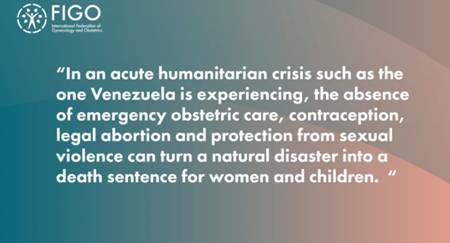
“In an acute humanitarian crisis such as the one Venezuela is experiencing, the absence of emergency obstetric care, contraception, legal abortion and protection from sexual violence can turn a natural disaster into a death sentence for women and children.”
Sexual and reproductive health sand rights (SRHR) are foundational to a functioning society, and their disruption has consequences that extend far beyond the women affected. When a woman dies or is disabled by preventable complications of pregnancy or childbirth, her surviving children face sharply higher risks of malnutrition, school dropout and death. Her household loses income and care capacity, and her community loses social cohesion. Maintaining SRHR services in not only life-saving for the woman. It is an investment in the survival of her children, the stability of her extended family and the capacity of her community to recover.
In humanitarian crises, task sharing – the practical redistribution of clinical duties from scarce medical specialists to other trained health workers – may be a viable option to gradually improve and restore access to SRHR services. This approach enables a system lacking personnel and resources to increase capacity and efficiency, with the aim of gradually repairing healthcare systems. Mobile health clinics can serve as an effective mechanism to support task sharing, providing care in isolated locations where individuals lack access to other healthcare facilities. Ultimately, addressing the collapse of SRHR services in a humanitarian crisis requires an immediate, strategic, multisectoral and sustained effort.
“Above all, a humanitarian response that neglects SRHR fails not only women, but the foundation on which recovery is built. As an organisation dedicated to promoting the health and rights of women and girls worldwide, FIGO stands ready to support collective efforts to protect women’s sexual and reproductive health amid the humanitarian crisis in Venezuela.”
SOURCE: FIGO Blog, 31 July 2026. https://www.figo.org/blog/calling-urgent-protection-womens-sexual-and-reproductive-health-amid-humanitarian-crisis