


by Carrie N Baker, Ms Magazine, 12/14/2025
The feminist telehealth provider is cutting out pharmaceutical middlemen to make abortion safer, simpler and more accessible across borders.
Across much of the world, medical providers do not offer abortion because this care is criminalized, stigmatized or unfunded. As a result, an increasing number of women are accessing abortion pills outside of the formal medical system. At the center of this shift is Women Help Women, a global telehealth abortion service that supports self-managed abortion by providing abortion pills and information about how to use them to women around the world, especially in places where abortion is restricted by law, stigma or lack of access.
Count the pills! One mifepristone, eight misoprostol in case you need more!
After a decade of relying on pharmaceutical companies to supply them with abortion pills, Women Help Women is changing course by seizing control of production. Women Help Women’s co-executive directors Kinga Jelinska and Lucía Berro Pizzarossa recently announced they have begun working directly with drugmakers in India to produce their own innovative combi-pack of mifepristone and misoprostol for distribution around the world.
Jelinska describes this move as a strategic shift. “We were already taking the risks of disseminating the information and distributing the pills to the end users. Now we are taking over the means of production to make ourselves less dependent.”
Frustrated by the pharmaceutical industry’s lack of innovation to meet the needs of abortion seekers, Women Help Women decided to take matters into their own hands.
“We know the issue of the future is who owns the pills, who owns access to the medicines,” said Jelinska. “We know how incredibly vulnerable the pathways to access could be if they are dependent on pharma and the market. I often say, pills don’t grow on trees.”
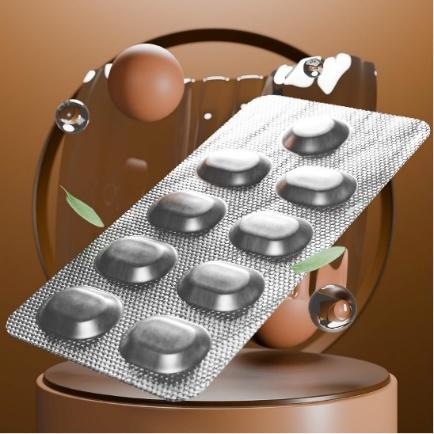
Women Help Women is redesigning how abortion pills are packaged to reflect what users actually need: a combi-pack that includes one mifepristone tablet and eight misoprostol tablets for use up to 12 weeks of pregnancy. The standard blister pack of abortion pills includes one mifepristone tablet and four misoprostol tablets, yet some women want extra misoprostol to ensure a complete abortion. The World Health Organization recognizes that additional doses are beneficial by not limiting the doses of misoprostol.
“Abortion pills are a tool of resistance and our weapon. These small pills, usually taken in the comfort of one’s own home, without the need to inform or justify one’s decision, free us from unwanted pregnancy.
“Abortion pills are a tool of empowerment, an act of self-defense. They are safe, self-administerable, and available at womenhelp.org “✨
The extra tablets are about reassurance, said Jelinska. “We sometimes say, misoprostol doesn’t only treat a uterus. If people are not sure the pills worked, we tell them to take two more pills. It will create a little bit more cramping, but you will feel more secure.”
By building extra tablets into the pack, Women Help Women’s combipack reduces the need to seek extra medications from medical providers, which can be inaccessible or legally risky in many places around the world.
Its smaller packaging also requires less postage, is easier to mail discreetly and is eco-friendly by using 30 percent less plastic, weighing 40 percent less and taking almost 50 percent less space. “Its lighter weight reduces the carbon footprint across manufacturing, storage and distribution—an important step in aligning abortion access with climate justice,” said Berro Pizzarossa.
In contrast, the U.S distribution system is more fragmented. FDA-approved distributors only provide one mifepristone in the blister pack, forcing clinicians to prescribe a separate bottle of misoprostol pills, which is cumbersome and costly.
Jelinska said their packaging innovation will fundamentally reshape abortion care, making it easier and putting more control in users’ hands.
“It’s a huge revolution of who actually gets to decide when, how and with the support of whom they can have an abortion and until when. It centers the needs of users rather than institutions or markets. The underlying notion is that abortion can be friendly, and abortion can be easy.”
“Self-managed abortion is disruptive. We were told that abortion is a difficult decision; that it has to be difficult to access, and that only doctors control it. Self-managed abortion subverts that …
Lucía Berro Pizzarossa
Since mifepristone first became available in France in 1988, access has been controlled by governments, the medical system and big pharma, which has done very little innovation to meet women’s evolving needs.
Women Help Women was designed to break that control and take power back, says Jelinska. “When we started it in 2014, we were already very aware of the potential of abortion medicines, but we knew that the paradigm of telemedicine would not suffice because it was still controlled by the medical system, the law and the market. We wanted to get the abortion pills into the hands of people and provoke a normative revolution: abortion that is safe, abortion that is friendly, and abortion that is easy to get. We wanted to decentralize abortion access.”
Women Help Women views taking production into their own hands as the next essential step toward fulfilling their mission to decriminalize, destigmatize, demystify and demedicalize abortion.

Instagram: womenhelp.org
For Berro Pizzarossa, self-managed abortion is not just a workaround but a profound shift in power:
“Pills have given us a power that we didn’t have before. Self-managed abortion is disruptive. We were told that abortion is a difficult decision; that it has to be difficult to access, and that only doctors control it. Self-managed abortion subverts that because the pills are small and they’re easy to use. Anybody that has access to good information can do it by themselves. They can be their own providers, right then, in a way that is safe and different from the DIY abortions from the past. It dismantles really everything that we were told about abortion. No doctor, no difficulty. It doesn’t have to be stigmatized.”
Berro Pizzarossa sees Women Help Women’s work as transformational, turning abortion from a clinical service into a question of justice and bodily autonomy. “Abortion is healthcare, but it goes way beyond issues of health. It has to do with justice. It has to do with your ability to control your own body.”
In a political moment defined by mounting attacks on abortion pills, controlling the product is not optional but essential, says Jelinska. To develop the new combipack, Women Help Women conducted focus groups to find out what women wanted in an abortion pill.
Producing abortion pills themselves not only opens the door to innovations, but also significantly reduces the cost of obtaining the medications—by 25 percent at least, said Jelinska. “It’s cutting out the middleman and our dependency on the middleman,” said Jelinska. “It’s not always about making everything as cheap as possible. It’s to make it as accessible as possible.”
In October 2025, Women Help Women began distributing their new combipacks in Europe, primarily in Poland and several other countries. Next, the combipacks will soon be rolled out in collaboration with MAMA (Mobilizing Activists around Medical Abortion), a network of 70 organizations operating in 27 sub-Saharan countries.
The new combipack marks the fulfillment of a longstanding dream for Jelinska. For years, Women Help Women facilitated access to medications, serving as an intermediary that helped groups arrange access, but they wanted to go further. “Five years ago, we had this collective dream that feminists have to own the means of production,” said Jelinska. “I remember when it seemed the world of markets and pharma was overwhelming and that we don’t belong there. But now I also see that that’s exactly what activism is: to go to places where you’re not wanted, and they tell you that you don’t belong, and you make the difference there.”

(Facebook)
Behind Women Help Women is a global team of feminist activists, trained counselors, medical professionals and researchers spread across 15 countries across four continents. Their online counseling team includes more than 22 extensively trained counselors, many of whom are multilingual. A team of physicians with deep experience in obstetrics, gynecology and abortion provision supports the team when needed. Information and email counseling are available for free every day of the year. Abortion pills are available to people in most countries around the world for a sliding scale donation up to 75 euros (around 87 dollars). “At least ten percent of our services are without donation and more than 25 percent donate much less than €75,” said Jelinska.
Since opening in 2014, Women Help Women has provided abortion pills to more than 100,000 women around the world. “We now provide pills to about 20,000 women a year, and we are growing exponentially,” said Jelinska.
In Poland, where abortion is illegal with only narrow exceptions, Women Help Women is the largest single provider of abortion care. Last year alone, Women Help Women provided 30,000 Polish women with abortion pills or information about how to use them. “We serve as many people in a day as the whole state of Poland does in a year,” said Jelinska, who now lives in the Netherlands, but is originally from Poland.
Women Help Women is also offering the combi-pack to telehealth abortion organizations. “By switching to the combi-pack, you will be supporting the feminist self-managed abortion movement,” said Jelinska.
To contact Women Help Women, email info@womenhelp.org.