


Things are falling apart, the centre cannot hold
Because the removal of the Roe v. Wade national policy on abortion has been scuppered, it is perhaps inevitable that different state-level courts in the US have begun to make rulings on what is legal and what is not, when it comes to abortion, which have now begun to contradict each other. Apparently, an apparently anti-abortion Louisiana judge blocked the use of mifepristone, telehealth and mail delivery of medical abortion pills, even though the US Supreme Court had already ruled once that this policy was not acceptable because it was not based in scientific or medical facts.
This time, the sudden shift left providers and patients scrambling, at least in some states. A few days later, on 4 May, the Supreme Court temporarily restored access to mifepristone and its use apparently quickly returned to “normal” levels. However, their ruling also said the prescription must be obtained by the woman seeking it in person. In the state of Maine, in the interim, misoprostol began to be used alone. But misoprostol alone is not as effective on its own (only 93% effective) as when combined with mifepristone, which is highly effective.
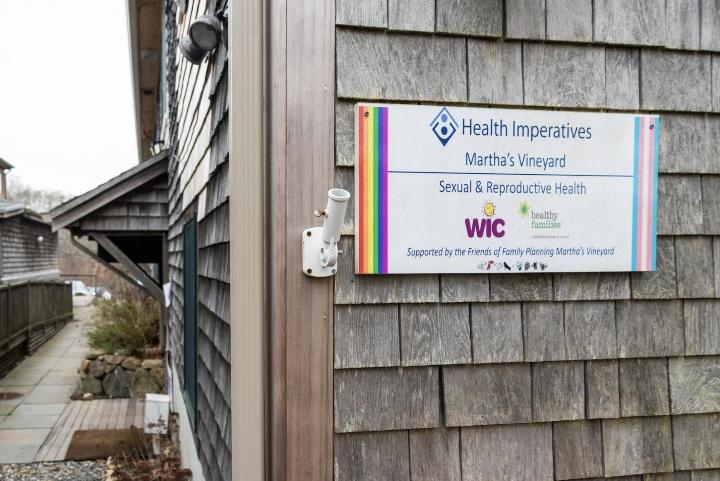
In Massachusetts, on the island of Martha’s Vineyard, the Vineyard Haven clinic, Health Imperatives, which covers birth control, sexual health and abortion services, decided to continue dispensing mifepristone with misoprostol in person, to patients seeking them, as they have enough stock of the pills to last a year. They expressed concerns about the speed with which supposedly legal decisions were being made and then changed, obviously also a national problem.
In the state of Connecticut, Attorney General William Tong, alongside Governor Ned Lamont and Reproductive Equity Now advocates held a news conference at the state capitol in response to the federal court ruling. They said: “Medication abortion is safe, legal and accessible in Connecticut – and that’s the way it’s going to stay.”
In the state of Arizona, patients were able to get abortion pills in the mail and use telehealth for about three months — access that was upheld by the U.S. Supreme Court.
In the state of Kentucky, a 35-year-old woman was arrested in late 2025, accused of taking abortion pills that she ordered online. The gestational age and status of the pregnancy was unknown. But Kentucky, like the majority of Southern US states, has a complete abortion ban…Her distressed photo was plastered all over regional news sites… and then there was also Florida, South Carolina and Wyoming, all on 5 May 2026.
“Abortion Access Is in Chaos. Blame the Supreme Court.” said one headline, which went on to say:
“The Court’s conservatives promised that repealing Roe would bring stability. It has done the opposite.” No, it did not bring stability but the Supreme Court has saved access to legal abortion with every ruling it has made so far. Don’t knock it. Blame Trump (editor).
SOURCES: The Vineyard Gazette – Martha’s Vineyard News | Island Abortion Service Remains Unchanged, For Now, by Emma Kilbride, 5 May 2026. PHOTO: Ray Ewing. Connecticut: https://ctnewsjunkie.com/2026/05/05/ct-officials-push-back-on-attempted-restrictions-of-abortion-meds/. Arizona: Arizona Republic, by Stacey Barchenger, 5 May 2026: https://tucson.com/news/state-regional/article_6e02c2b7-cd76-4cf6-98ef-0462001332df.html; Kentucky, by Gretchen E Ely, Professor of Social Welfare, Stony Brook University, 5 May 2026: https://theconversation.com/in-rural-appalachia-abortion-pill-offers-reproductive-choice-and-privacy-but-police-may-see-a-crime-279493; Florida: https://www.salon.com/2026/05/05/the-rising-toll-of-floridas-abortion-ban/; South Carolina: https://slate.com/news-and-politics/2026/05/south-carolina-republicans-prison-abortions.html; and Wyoming, by Hanna Merzbach, https://www.npr.org/2026/05/05/nx-s1-5810606/wyoming-lawmakers-use-pro-natalist-arguments-to-justify-proposed-new-partial-abortion-ban.
+ + + +
City University of New York, May 2026
Justice Matters : CUNY SPH SRJ HUB

In full bloom
We are blooming with updates this May! At the SRJ Hub, our long-envisioned master’s degree program in Sexual and Reproductive Justice & Health is coming to life in the classroom, guided by dedicated faculty and driven by students ready to engage in the critical work ahead. Our faculty researchers are cultivating new knowledge across a range of critical topics that sit at the intersection of health equity and reproductive justice. Meanwhile, our team has been showing up in full force advocating at the state legislature, at conferences, delivering keynotes, and being featured in a new video series.
From: NEWS & RESEARCH
Telehealth provides safety and access for sexual and gender minority patients
A study by CUNY SPH researchers suggests that telehealth remains an important and valued care option for sexual and gender minority adults, particularly for those seeking privacy, convenience, and affirming care.
LETTER TO THE EDITOR
Restrictive US abortion laws are making pregnancy more dangerous—and in some cases deadly
Perspectives on the new SRJH curriculum with Ambrosia Beckford
Ambrosia Beckford is among the inaugural cohort of students completing coursework from CUNY SPH’s new MPH in Sexual and Reproductive Justice & Health program. Driven by a medical anthropology background and personal experience, Ambrosia has collaborated with faculty on reproductive health research and is taking what she’s learned into the real world. Ahead of graduation, we talked about her experience in the program.
“The SRJH classes I’ve taken gave me the confidence I don’t think I had before to go out and do something with what I’ve learned. I know what I’m talking about now. I have the knowledge, and I can put it into action.” – Ambrosia Beckford, MPH in Community Health
SCHOLARSHIP
NEW CUNY Masters in Public Health in Sexual and Reproductive Health
About the Program
DELIVERY METHOD: HYBRID (ONLINE AND ON-CAMPUS) TO FULLY ONLINE
ENROLLMENT TYPE: FULL-TIME| PART-TIME
SCHOLARSHIPS AVAILABLE
The MPH in Sexual and Reproductive Justice & Health prepares students to address critical issues in sexual and reproductive health through a public health justice-centered lens and interdisciplinary approach. The program examines the historical and social context of the health care delivery system and related policies and political forces that shape health inequities, focusing on systems of power, privilege, and oppression that affect access to care and support.
Details online: https://sph.cuny.edu/academics/degrees-and-programs/masters-programs/mph-in-sexual-and-reproductive-justice-and-health/