


by Pardess Mitchell
American Public Health Association, Public Health Newswire, 23 September 2026.
Data from cellphones, social media and other electronic means leave a digital footprint that can be used to build a case against people seeking abortions, according to American Public Health Association member, Pardess Mitchell, EdD, MCHES, a professor and department chair of kinesiology and health education at Harper College in Palatine, Illinois.
In 2022, before Dobbs v. Jackson Women’s Health Organization ended the constitutional right to an abortion in the USA, police were already building a case against two women in Nebraska, where some abortions were banned.
A 17-year old named Celeste Burgess had experienced a pregnancy loss at 29 weeks and investigators suspected it was not a miscarriage. Their first move was to serve a warrant to Facebook to obtain private messages between Celeste and her mother, which referenced accessing abortion pills online, the timing of their use and what to do afterward. Both women were charged and convicted. In 2023, Celeste Burgess was sentenced to 90 days in jail and two years of probation; her mother received two years in prison.
This was not an isolated or extreme example. It is a preview of what’s to come, not just for those seeking abortions, but for anyone whose health decisions, search history or private conversations could someday be reframed as evidence.
The Burgess case illustrates the risk that private communications can be subpoenaed. But a separate, equally alarming threat required no warrant at all. In 2024, Sen. Ron Wyden of Oregon revealed that a data broker company had tracked visits to nearly 600 Planned Parenthood locations across 48 states and sold that data to fuel one of the nation’s largest anti-abortion advertising campaigns. The people tracked never consented to having their location data collected, sold or weaponized. They simply showed up and their cellphones did the rest.
Cellphone-location data puts people who seek or provide abortion care at risk of prosecution and harassment. Today, data brokers can legally sell this information to anyone with a credit card, including law enforcement or anti-abortion litigants in states where abortion is criminalized. The simple act of driving to a reproductive health clinic now carries legal risk that most patients never anticipate and cannot easily avoid.
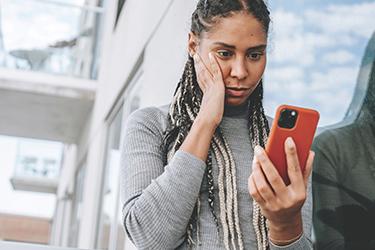
Photo by Alex Green, courtesy Pexels
Most people are overly optimistic about the private nature of their digital lives. In practice, that privacy is often an illusion. For example, in May 2025, the Johnson County, Texas, sheriff’s office searched over 83,000 automated license plate reader cameras to locate a woman who had self-administered an abortion, with the search reason listed as “had an abortion, search for female”. This reflects a broader trend: tools such as location tracking, license plate readers and data broker sales are increasingly used against immigrants, protesters and transgender people seeking care, with digital data functioning as evidence in states where abortion is criminalized.
Many people do not realize that seemingly unrelated data such as a ride share to a medical building, a delivery order to a pharmacy or a search for “missed period” can combine to create a legally usable narrative. Text messages, browser histories, emails and location data are the highest-risk categories in abortion-related investigations.
Device users can minimize their digital footprints by turning off location services and access to location data unless necessary for operation. Privacy-focused search engines, encrypted messaging platforms and private browsing reduce the volume of accessible data.
Public health educators and practitioners are uniquely positioned to respond to this crisis. That means two things: advocating for the policy changes needed to structurally protect health data — through data broker regulation, expansion of HIPAA protections and reproductive privacy legislation — and equipping the people we serve with digital literacy skills to reduce their own exposure. Otherwise, before their doctor knows, before they’ve said a word in an exam room, patient data may have already told a story they never meant to share.
SOURCE: Guest authors (unnamed in the article). American Public Health Association, Public Health Newswire, 23 September 2026. https://www.apha.org/publications/public-health-newswire/public-health-newswire/articles/digital-literacy-is-a-matter-of-reproductive-safety