


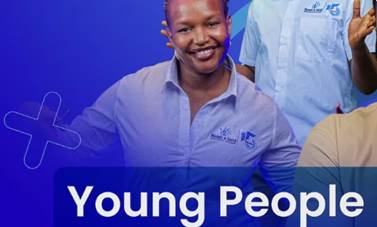
“When I first came here, I didn’t know how to operate a sewing machine. Today, I can make school uniforms, earn an income, and dream about opening my own tailoring shop.” Audrey B.
This is more than a success story. It is the story of what happens when a young woman is allowed to overcome limitations.
Across Uganda, thousands of women and girls continue to face barriers to education, employment and economic independence. While national policies recognize the importance of investing in women and young people, many still lack access to practical skills that translate into sustainable livelihoods.
At the LEESU Skilling Hub, Reach A Hand Africa is helping to close that gap.
Building Skills. Building Confidence. Building Futures.
The LEESU Skilling Initiative is proving that economic empowerment begins with practical opportunity.
Following the successful graduation of 30 girls & women in December 2025, the Hub has welcomed 31 new learners who are currently undertaking vocational and digital skills training. Participants are gaining hands-on experience in:
- tailoring
- hairdressing and salon skills
- knitting and sweater making
- computer & digital literacy
- modern kitchen gardening
These are not simply courses; they are pathways to employment, entrepreneurship and self-reliance.
Turning national commitments into community action
Uganda has made significant commitments to empower women, girls and young people. The challenge has always been translating policy into everyday opportunities and endless possibilities.
The LEESU Skilling Initiative demonstrates exactly what this looks like.
The programme directly contributes to the Fourth National Development Plan (NDP IV) by advancing human capital development, increasing household incomes, promoting employment creation and strengthening community resilience through practical skills and entrepreneurship.
The initiative also supports implementation of the National Guidelines on Health Education and Life Skills for Out-of-School Adolescents, which recognize that out-of-school young people need more than information; they need practical life skills, vocational competencies, confidence, financial literacy and decision-making abilities that prepare them for productive adulthood. By combining vocational training with digital literacy for market access and nutrition education, LEESU responds to these national priorities while creating safe spaces where women and girls can learn, lead and thrive.
The initiative further complements Uganda’s:
- National Youth Policy
- Uganda Gender Policy
- National Strategy to End Child Marriage and Teenage Pregnancy
- National Strategy for Girls’ Education
Together, these frameworks envision a Uganda where every young woman has the opportunity to participate fully in social and economic development. LEESU is helping make that vision a reality.
What comes next?
The journey does not end with graduation. Reach A Hand Africa is preparing to provide seed funding that will enable learners, schools, and communities to establish and expand nutritional gardens, transforming training into lasting action. This next phase will strengthen food security, improve nutrition and create additional income opportunities for participating households.

Our Call to Action
Every tailoring lesson is an investment in household income. Every computer class strengthens digital inclusion. Every kitchen garden improves nutrition and food security. Every learner represents another woman equipped to shape her own future. This integrated approach reflects Reach A Hand Africa’s belief that sustainable development cannot happen unless women and girls have equal access to economic opportunities. As learners gain confidence, they become employers, community mentors, entrepreneurs, and role models for younger girls.
That is how change becomes sustainable. The LEESU Skilling Initiative directly contributes to the Fourth National Development Plan by advancing human capital development, increasing household incomes, promoting employment creation and strengthening community resilience through practical skills and entrepreneurship.
The initiative also supports implementation of the National Guidelines on Health Education and Life Skills for Out-of-School Adolescents, which recognize that out-of-school young people need more than information; they need practical life skills, vocational competencies, confidence, financial literacy and decision-making abilities that prepare them for productive adulthood.
The initiative further complements Uganda’s National Youth Policy, Gender Policy, National Strategy to End Child Marriage and Teenage Pregnancy, and National Strategy for Girls’ Education. Together, these frameworks envision a Uganda where every young woman has the opportunity to participate fully in social and economic development. LEESU is helping make that vision a reality.
Every tailoring lesson is an investment in household income. Every computer class strengthens digital inclusion. Every kitchen garden improves nutrition and food security. Every learner represents another woman equipped to shape her own future. This integrated approach reflects Reach A Hand Africa’s belief that sustainable development cannot happen unless women and girls have equal access to economic opportunities. As learners gain confidence, they become employers, community mentors, entrepreneurs, and role models for younger girls. That is how change becomes sustainable.
+ + + +
Reach A Hand Uganda (RAHU) is a youth-centered non-profit organization dedicated to empowering young people with the knowledge, skills, and opportunities they need to make informed life choices.
Founded in 2011, RAHU focuses primarily on Sexual and Reproductive Health and Rights (SRHR), ensuring that young people across Uganda have access to accurate information and quality services.
We operate in more than 53 districts across Uganda, engaging youth ages 10–19 and 20–30 who face SRHR challenges. We partner with young people living with HIV, refugees, youth who are in – and out-of-school, and those living with disabilities. We also work closely with men as users, advocates, and satisfied users of family planning. We recognize their critical influence on reproductive health decisions within families and communities.
A cornerstone of our impact is our national network of 836+ trained peer educators, who lead community mobilization and SRHR information sharing and significantly increase service uptake. Their efforts are supported by interpersonal communication agents who promote male involvement in family planning, including informed uptake of vasectomy.
Our digital communications hub, SautiPlus, amplifies RAHU’s work by creating and disseminating youth-friendly SRHR content to millions of young people and the adults who influence them—parents, teachers, cultural leaders, policymakers, and more.
Our Vision: A world of young people making informed life choices.
Reach a Hand invites donors to support this initiative!!