


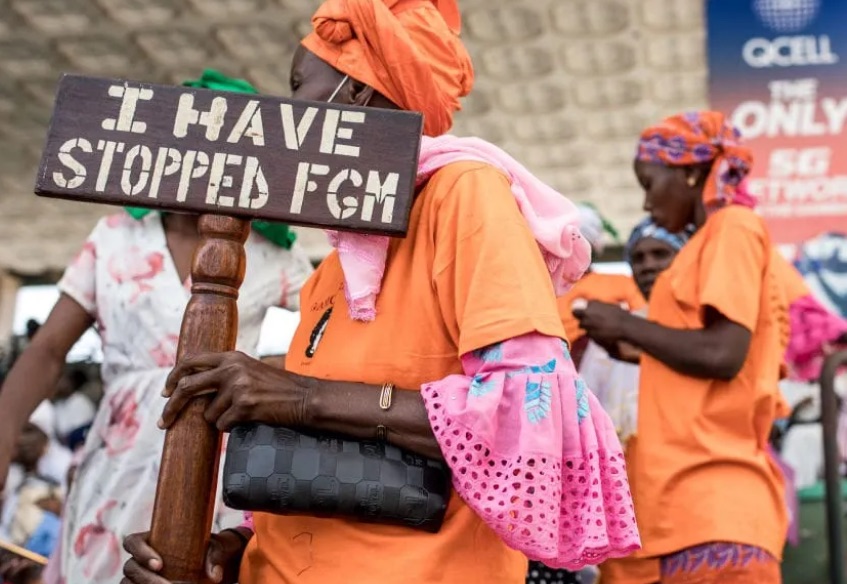
When lawmakers moved to legalise FGM again, Gambian feminists turned a dangerous rollback into a landmark victory
In July 2024, The Gambia came closer than any country in the world to reversing a ban on female genital mutilation. A practice that had been criminalised for nearly a decade was on the verge of becoming legal again.
Then feminist organisers stopped it.
After months of sustained organising, community mobilisation and public campaigning, the National Assembly voted 34 to 19 to reject a bill that would have repealed the country’s 2015 ban on FGM. It was a major victory, not only for Gambian women and girls, but for feminist movements across the continent.
The fact that the vote happened at all should alarm us. Just months earlier, in March 2024, 42 members of the same Parliament had voted to advance the repeal bill. Its supporters argued that FGM is Islamic and the ban was a Western imposition – that Gambians, up to 96% of whom are practising Muslims, should be free to practise their faith as they see fit. These false arguments – there is no requirement for FGM in Islamic law – were not new, but they were better coordinated and more politically embedded than before.
At a moment when anti-rights forces are better funded, better organised and more confident, The Gambia offers something the feminist movement badly needs: a documented win, and a template worth studying. It is a rare case of a movement turning a political crisis into momentum. But it is also a reminder that ‘winning’ in legislation does not automatically deliver change.
In August 2025, a one-month-old baby girl, Sarjo Conteh, was rushed to a hospital in Banjul. She had been cut. By the time doctors reached her, she had bled to death. The Gambian authorities confirmed that her injuries were the result of FGM.
Conteh’s death was not an isolated incident. Activists on the ground have for years reported that the 2015 ban has not ended FGM, but pushed it underground, and led to girls being cut younger than ever. Many families believe that infants as young as a few days old will heal faster from the cutting, meaning evidence will be harder to detect.
Recently, activist Dr Leyla Hussein wrote about this tragedy with the clarity and fury it deserved. She named what so many institutions still refuse to: that FGM is sexual violence, that it is child abuse, and that the world’s reluctance to say so plainly is inseparable from the fact that the children being harmed are overwhelmingly Black and Brown girls. She asked why, if this violence were happening to white children, there would be any hesitation at all in calling it assault. There would not be.
Hussein also wrote about the particular cruelty of normalisation: the way survivors are taught to question the legitimacy of their own pain when the world has minimised it first. That is the atmosphere in which Sarjo Conteh died. That is the atmosphere in which three women were recently acquitted in connection with her death.
And that is why the legislative fight in The Gambia, as hard-won as it was, cannot be the end of the story. Even now, the people who tried to roll back this right are petitioning the Supreme Court, claiming that the ban violates their right to religious and cultural freedom.
This is a story about a victory. But it is also a story about the fragility of that victory, and about what enforcement, long-term cultural change and sustained feminist organising actually require…
Note: This is a long article. Please go to the website to read the rest, which starts with some history –First, “How we got here”, criticising the fact that anti-FGM was described as anti-Islam, when FGM is not an Islamic practice. Next is “What the movement needs now”, which talks about everyone who needs to get involved, and what they need to do, to stop the return of FGM. The article closes with the following by the author, speaking personally:
“I have spent decades on this. I will spend whatever decades remain on it. But two years on from July 2024, I want to be clear about what that moment meant, and what it did not. It meant that a specific, coordinated rollback was defeated. It meant that activists who risked a great deal showed it was possible to turn a political crisis into momentum. It did not mean that the work is done, or that the protections are secure, or that the next attempt will not come. We stood on the right side of history. Now we have to make sure we stay there.”
***
The author, Dr Isatou Touray, is the Executive Director of GAMCOTRAP (The Gambia Committee on Traditional Practices Affecting the Health of Women and Children) and a former Vice President of The Gambia. A survivor of FGM, she has led community-based advocacy against the practice for over three decades, reaching more than 1,000 communities across the country.
SOURCE: openDemocracy, by Isatou Touray. 17 June 2026.