


by Médecins sans Frontières (MSF)
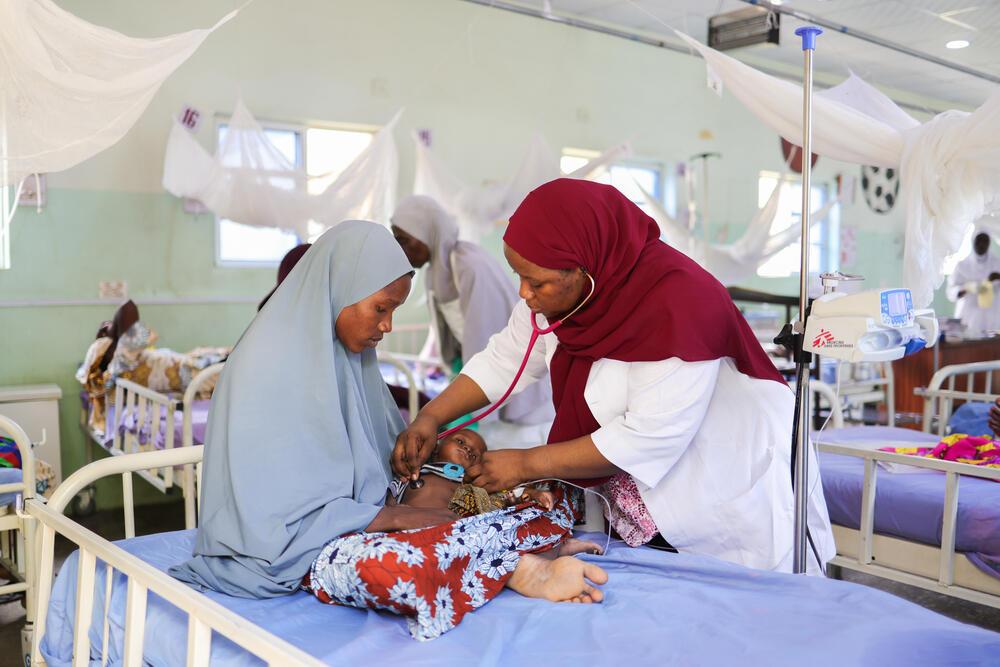
In the photo, an MSF medical doctor examines Faiza Isa’s seven-month-old child Abubakar Gharzali at the MSF-supported Inpatient Therapeutic Feeding Centre Unguwa Uku, Kano state, Nigeria.
PHOTO: © Abba Adamu Musa/MSF
For several years, Nigeria has faced a severe malnutrition crisis with the number of children being treated rising steadily each year since 2022.
In 2025, Médecins Sans Frontières / Doctors Without Borders (MSF) teams treated 425,634 children for acute malnutrition across northern Nigeria. This is a 41.8 percent increase compared to 2024.
The sounds of this crisis are heard in the cries of children that fill MSF’s intensive care unit at the nutrition facility in Maiduguri, Borno State. Borno is one of the seven states across northern Nigeria where MSF runs nutrition projects.
Here, the physical effects of severe acute malnutrition are stark. Visible through extreme wasting and rapid weight loss. Malnutrition leaves children with severely weakened immune systems, making them extremely vulnerable to deadly illnesses like measles, diphtheria, and malaria.
Yet, this toll extends far beyond the physical. For many children, treatment for malnutrition lasts anywhere between 7 to 45 days. This prolonged recovery requires children to be continuously accompanied by a caregiver – a role that almost always falls to mothers. Consequently, these mothers face the heavy burden of remaining in the hospital for weeks, forcing them to pause their daily lives and leave other children at home.
“I barely sleep. For the past two days, I have not been feeling well myself.” (Fatima Ibrahim, Mother of 23-month-old daughter, Aisha)
A forced choice
Fatima Ibrahim’s 23-month-old daughter, Aisha, was admitted to the MSF’s nutrition facility in Maiduguri after battling meningitis and repeated convulsions. During their three weeks admission, Aisha’s condition began to improve, but Fatima’s thoughts remained with her eight children at home.
“I am worried about my children. There is no one to take care of them. Their father is away and they do not have anything to eat or drink.”
There is a strong sentiment of guilt. As Latifat Abdulkareem recalled when her eldest son visited the hospital during his sister’s admission: “He asked me when I was coming home. He said they were hungry since I wasn’t around.”
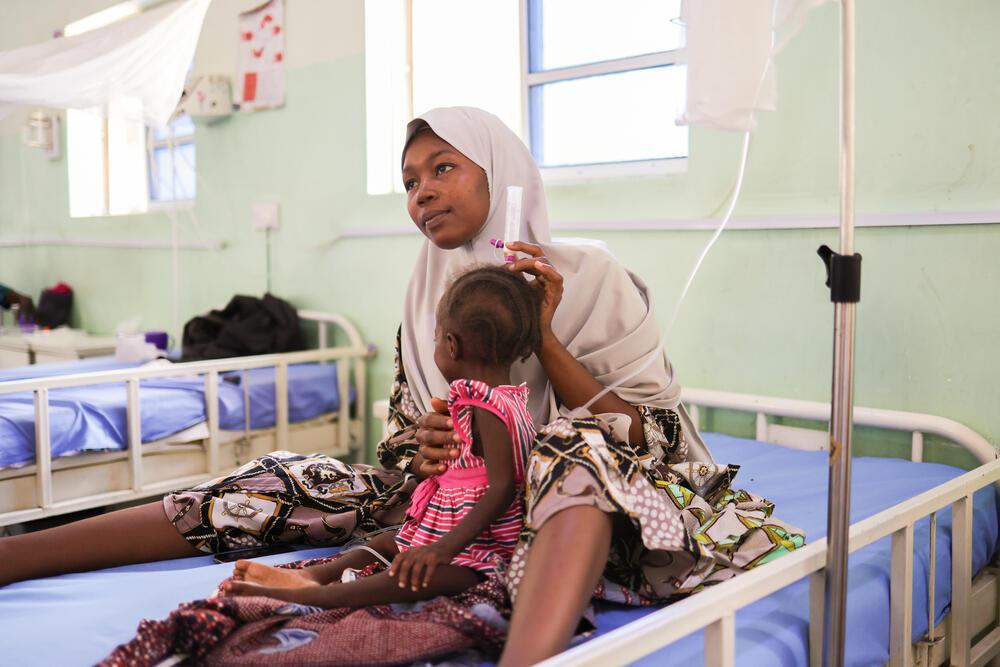
This mental game of tug-of-war, combined with prolonged uncertainty and a severe lack of sleep, can eventually take a heavy toll on a caregiver’s own health.
As Halima Mohammed explained, after spending 45 days moving between hospitals with two sick children: “When I brought my children here, their conditions were not good. I barely sleep. For the past two days, I have not been feeling well myself.”
Caring for the caregiver
This emotional impact can affect a caregiver’s ability to continue providing care, directly impacting a child’s treatment and, ultimately, their recovery. While medical statistics can capture admissions and treatment rates, they cannot measure the emotional burden carried by families supporting a critically ill child.
This is why MSF teams across Nigeria’s nutrition facilities are integrating mental health and psychosocial support right from the beginning of treatment.
On arrival, caregivers receive psychological first aid followed by individual and group counselling sessions. This creates a space where caregivers can share experiences with others, express their fears, and learn ways to cope with the pressures they face.
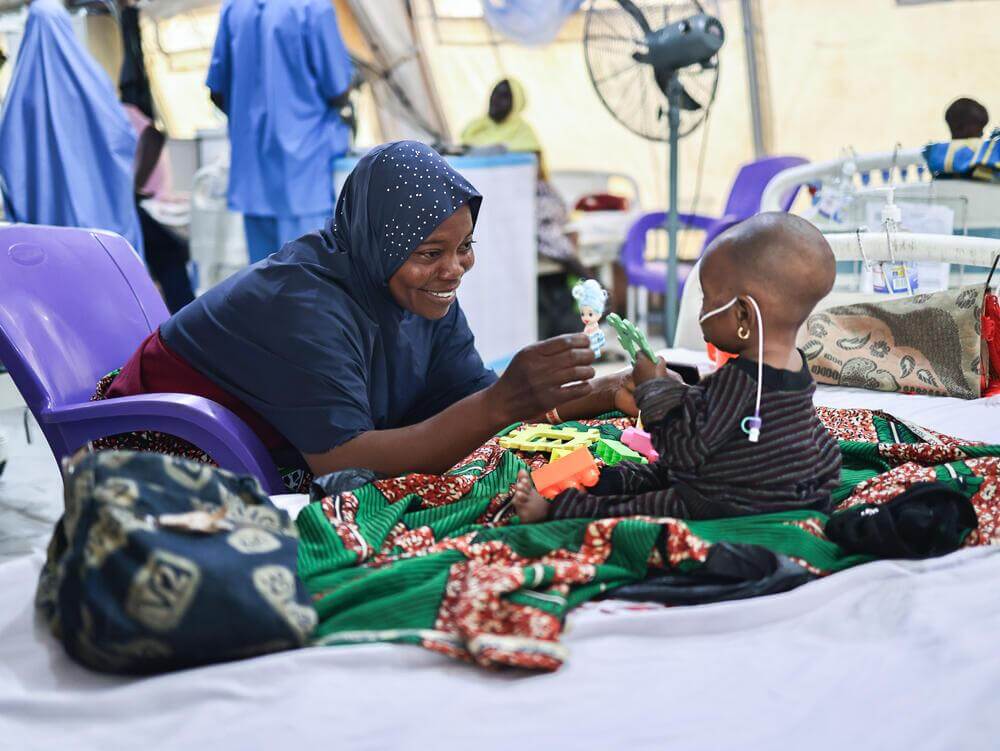
Latifat Abdulkareem playing with her seven-month-old daughter Aisha Abdulkareem who is on admission and is being treated for malnutrition at MSF’s facility Nilefa Kiji, Borno state, northeast Nigeria. © Abba Adamu Musa/MSF
“For us, those moments remind us that caring for the caregiver is also part of caring for the child”, Kethurah John, MSF counsellor/educator
This support extends beyond counselling. When caregivers become anxious after losing contact with relatives at home, counsellors help them reach family members by phone. In some circumstances, supervised home visits can be arranged, allowing a caregiver to check on their families before returning to continue their child’s treatment.
Children receive structured play activities that allow them to interact, express themselves, and regain a sense of normalcy while in hospital.
This therapeutic environment was life-changing for Mariya Mukhtar, who arrived at the Kano facility convinced her severely ill daughter would not survive a brutal bout of fever, vomiting, and diarrhoea.
“I was in a state of complete distress and unhappiness. Having been to so many hospitals with zero improvement, I truly never thought she would get better.” Yet, within nine days of treatment, her daughter’s condition improved so dramatically that she was able to sit up, play, talk, and recognise her mother once again.
Kethurah John, an MSF counsellor, explained how witnessing a child’s improvement allows many carers to gradually regain hope. Some even return to the facility long after discharge just to show how healthy their children have become. “For us, those moments remind us that caring for the caregiver is also part of caring for the child.”
+ + + + +
SHORTS
- Hungary: the government submitted a bill to amend anti-LGBTQ rules for minors introduced under Viktor Orbán, to align with EU standards.
- Ireland: a bill to scrap the mandatory three-day waiting period for abortion is advancing through the Oireachtas.
- South Korea: the drug-safety ministry said it aims to approve the country’s first abortion pill by the first quarter of 2027.
SOURCE: Nigeria: Caring for the carers in a malnutrition crisis | MSF UK