


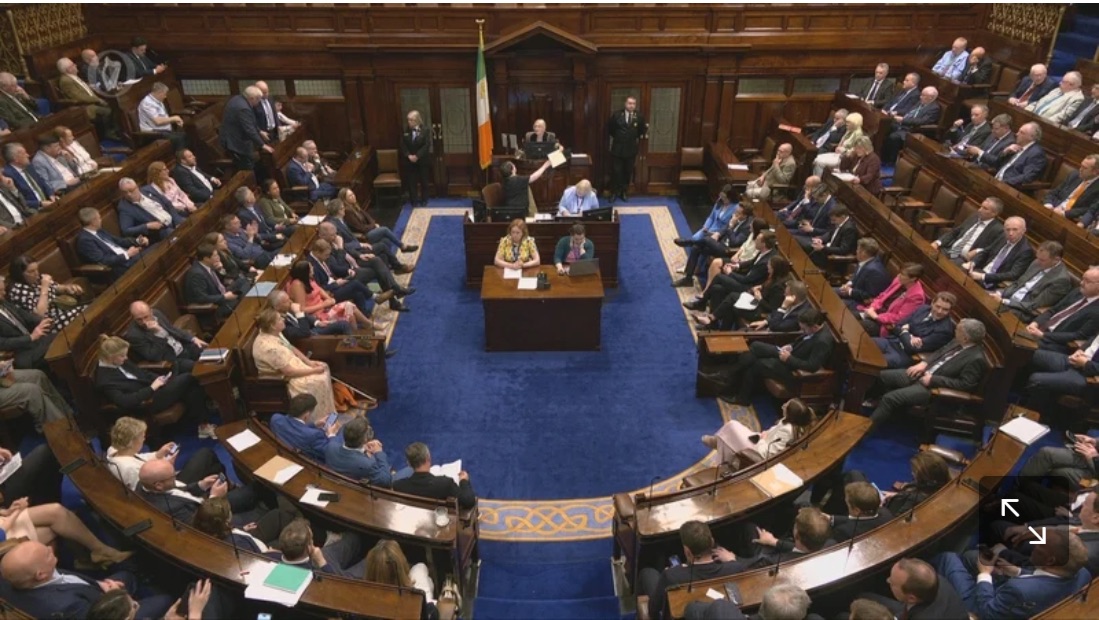
Irish parliament votes to remove three-day abortion wait, that is, the waiting period before receiving abortion pills, which was included in the draft law to gain support for ending the abortion ban in the 2018 referendum
Ireland’s parliament has voted to remove the mandatory three-day wait for receiving abortion pills, during early pregnancy after campaigners said the rule was an unnecessary restriction.
The Dáil passed the bill on Wednesday night, clearing a path for the legislation to go to a parliamentary committee and become law later this, or next, year.
Supporters said it was one of the most significant changes to women’s healthcare since voters ended a constitutional ban on abortion in the 2018 referendum.
SOURCE: The Guardian, by Rory Carroll, Ireland correspondent, 18 June 2026.
+ + + +
What would scrapping the three-day wait for abortion mean for pregnant women?
-Greatest effect would be for women who, for various complex reasons, seek an abortion close to the end of their first trimester
One Christmas Eve, a staff member at a woman’s health centre spent the day calling as many hospitals as possible in an effort to get an appointment for a woman who needed to access an abortion. The woman was still less than 12 weeks pregnant, within the legal limit for free access to abortion in Ireland.
The woman had already had her first appointment, which started the clock on the mandatory three-day wait between when a woman seeks an abortion and is granted one at a second appointment 72 hours later. But it was Christmas time and, with all the public holidays, she was not going to get her second appointment until after passing the 12-week mark.
SOURCE: Irish Times, by Ellen Coyne, 18 June 2026.
+ + + +
NWC hails removal of mandatory 3-day wait for abortion as major win for women’s health and equality
The National Women’s Council (NWC) has said that the progression of the Bill to remove the mandatory 3-day waiting period for abortion services is a major win for woman, particularly marginalised and vulnerable women who may find it difficult to access two GP appointments.
The NWC’s Executive Director Corrinne Hasson said:
“NWC has campaigned for the removal of this paternalistic and medically unnecessary provision for years now. We know that women in situations of domestic abuse, women living in IPAS centres, disabled women, rural women, and women on lower incomes all face more difficulties attending two GP appointments. We also know that in some cases the mandatory 3-day wait has timed women out of care, forcing some to travel. So it’s very welcome that this will now change.”
SOURCE: National Women’s Council Ireland. https://www.nwci.ie/learn/article/nwc_hails_removal_of_mandatory_3_day_wait_period_for_abortion_as_major_win
+ + + +
The Dáil (Irish Parliament) approved Sinn Fein abortion bill to remove the three-day wait for abortion services, but most Govt TDs vote against
The Irish Parliament (Dáil) approved the Sinn Fein abortion bill on 18 June 2026 by a vote of 86 for, 70 against, but most government Members of Parliament (MPs), who had a free vote on the issue as a matter of conscience, voted against the bill. The majority of Fianna Fáil MPs voted against the bill, included five members of the Cabinet: Minister for Justice, Minister for Social Protection, Minister for Housing, Minister for Children and the Government Chief Whip.
The Taoiseach (Prime Minister) Micheál Martin, Minister for Public Expenditure Jack Chambers and Minister for Transport Darragh O’Brien voted for the proposal.

It is understood that the Minister for Health Jennifer Carroll MacNeill will now hold discussions with Attorney General Rossa Fanning and the bill could become law by the end of the year.
Fine Gael Dún Laoghaire TD Barry Ward said he would vote in favour of the Sinn Féin bill, having previously voted for the Social Democrats bill last month which had further provisions.
“You don’t have to think abortion is a good or desirable thing to believe that it is a matter for each individual to make the decision if it is the right thing for them,” he said. “We have to presume that women will think long and carefully about such an important decision and the presence of a mandatory three-day waiting period assumes the opposite. We have to trust women to make the right decision for their specific circumstances.”
SOURCE: RTȆ-100, by Barry Lenihan, 18 June 2026