


SAN JUAN, Puerto Rico — Dozens of protesters gathered in front of the Dominican Republic’s congressional building on 10 July 2025 to rally against proposed new laws that would uphold an abortion ban, allow discrimination based on sexual orientation, and exempt churches, municipalities and others from criminal liability.
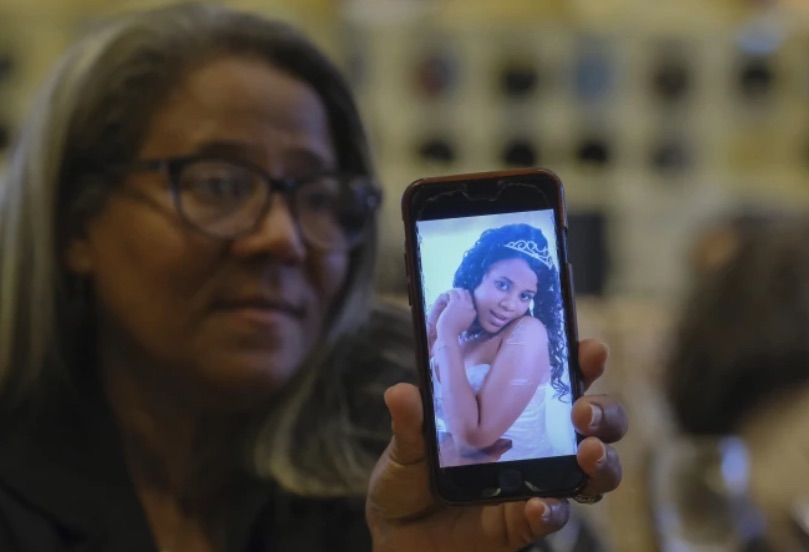
Rosa Hernández shows a photo (above) of her late daughter Rosaura Almonte in Santo Domingo, Dominican Republic on 10 December 2023. Hernández had asked for an exception for her daughter to get an abortion in order to be able to use chemotherapy safely for her leukaemia treatment, but it was denied because that would have put the fetus at risk of death. In the Dominican Republic, abortion is criminalized without exceptions. Both her daughter and her daughter’s 13-week-old fetus died in 2012.
The Dominican Republic currently operates on a penal code dating from 1884, and efforts to reform it in the past 23 years have failed.
“It’s a code that has many setbacks in terms of rights,” said Sergia Galván Ortega, longstanding activist with the Coalition for Women’s Lives and Rights. She joined the demonstrators, who demanded that abortion be allowed in cases of rape, incest or fatal fetal abnormalities.
The Dominican Republic, Nicaragua, Honduras and El Salvador all continue to maintain an absolute abortion ban in Latin America. The proposed revised penal code was fast-tracked in commission and is expected to be approved by the Dominican Senate and Chamber of Deputies. It would then go to President Luis Abinader, who several years ago said he supports allowing abortion under certain circumstances.
However, protesters noted that the proposed penal code does not recognize marital rape and would even allow physical violence against children if the adult does not demonstrate a pattern of aggression. It also calls for lesser prison time for child sex abuse cases with “no penetration”. “That’s terrible,” said Natalia Mármol, an activist and member of the Women’s Coalition.
A decade ago, former President Danilo Medina vetoed a different proposed penal code, demanding that abortion be allowed under certain circumstances. Lawmakers amended the code, but a court eventually struck it down amid opposition from religious officials.
SOURCE: AP News, by Dánica Coto, 10 July 2025 ; AP News, by Maria Teresa Hernandez, 2 January 2024. AP Photo/Ricardo Hernandez, 2023.