


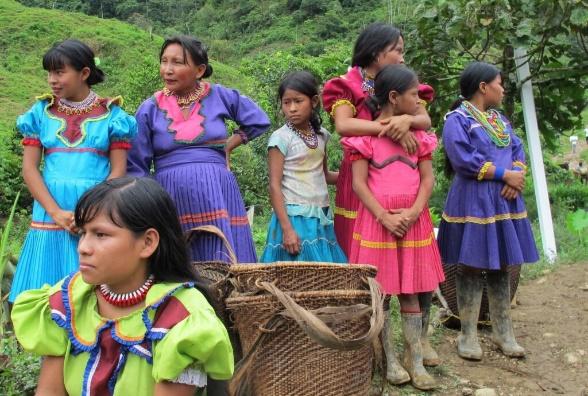
In Colombia, legal access to abortion services remains deeply uneven in practice, especially for many indigenous, Afro-Colombian, and migrant women. While abortion was decriminalized under certain conditions by the Constitutional Court in 2006 and later fully decriminalized up to 24th week of pregnancy in 2022, the right to terminate a pregnancy exists only on paper for these communities. On the ground, what prevails–revealed in a recent report published by local newspaper El Espectador–is a geography of silence, one marked by systemic barriers, cultural stigma, geographic isolation, and institutional racism.
While Colombia’s progressive abortion rulings have been hailed globally as landmark victories for reproductive rights, their implementation has been uneven. In urban centres like Bogota or Medellin, women with access to information and healthcare can often exercise their rights with relative ease. But in rural, indigenous, and Afro-descendant territories, or in urban peripheries where migrants settle, access is obstructed by multiple overlapping forms of exclusion.
In indigenous communities, traditional views on fertility and motherhood often intersect with patriarchal norms, making the topic of abortion taboo. Women who seek abortions may be labelled as immoral or shunned by their communities. Many indigenous health authorities even lack adequate training on reproductive rights, and some resist implementing abortion services, even when technically permitted under Colombian law.
For Afro-Colombian women, especially those living on the Pacific Coast in departments like Choco or Cauca, the problem is compounded by state neglect. Health infrastructure in these regions is precarious or non-existent. Racism and classism in the health system further alienate Afro-descendant women from seeking care. Many are forced into unsafe procedures or compelled to carry unwanted pregnancies to term.
Migrant women also face a different but equally harrowing reality when it comes to abortion. Often lacking legal status, they are afraid to approach public health services. Language barriers, misinformation, and fear of deportation create a tense environment where unfortunately, abortion becomes a distant or a dangerous option.
According to the World Health Organization (WHO), 45% of abortions in Latin America are performed under unsafe conditions. In Colombia, despite having clear regulations, more than 70% of Afro-descendant women who have had abortions did so outside the formal healthcare system, according to data collected by ILEX Accion Juridica, an Afro-Colombian NGO.
Legal advances vs. practical gaps
The 2022 Constitutional Court decision (C-055/22) was supposed to open the door for safe and stigma-free abortions for all women up to the 24th week of pregnancy. However, health care providers continue to resist its implementation. In conservative regions, hospitals invoke “conscientious objection” to refuse the procedure, often without referring patients elsewhere, an illegal but widespread practice. This resistance is particularly entrenched in regions with large Indigenous or Afro populations. In many cases, women are not even aware of their rights. In other cases, they know but face threats, humiliation, or outright denial or care.
Despite these challenges, grassroots organizations across Colombia are working to close the gap. Collectives like Orientame, La Mesa Por La Vida, and regional networks of Indigenous and Afro feminist activists offer counselling, accompaniment, and even logistical support arranging transport and housing for women who must travel long distances to access safe services. These networks often operate in secrecy, out of fear of backlash from local authorities or conservative community leaders. Yet their work is essential and, in many cases, allow women to create their own maps to dignity and choice.
In Colombia’s context, addressing the structural barriers–such as racism, poverty, cultural stigma and health inequities–is essential to ensuring that abortion is not just a right merely on paper, but a real, lived option for all. Until then, the geography of silence will persist, and Colombia’s most vulnerable women will remain on the margins of their own reproductive autonomy.
SOURCE: ColombiaOne, by Natalia Falah, 22 July 2025. PHOTO CREDIT: Ocha Colombia / CC-NC ND 2.0.