


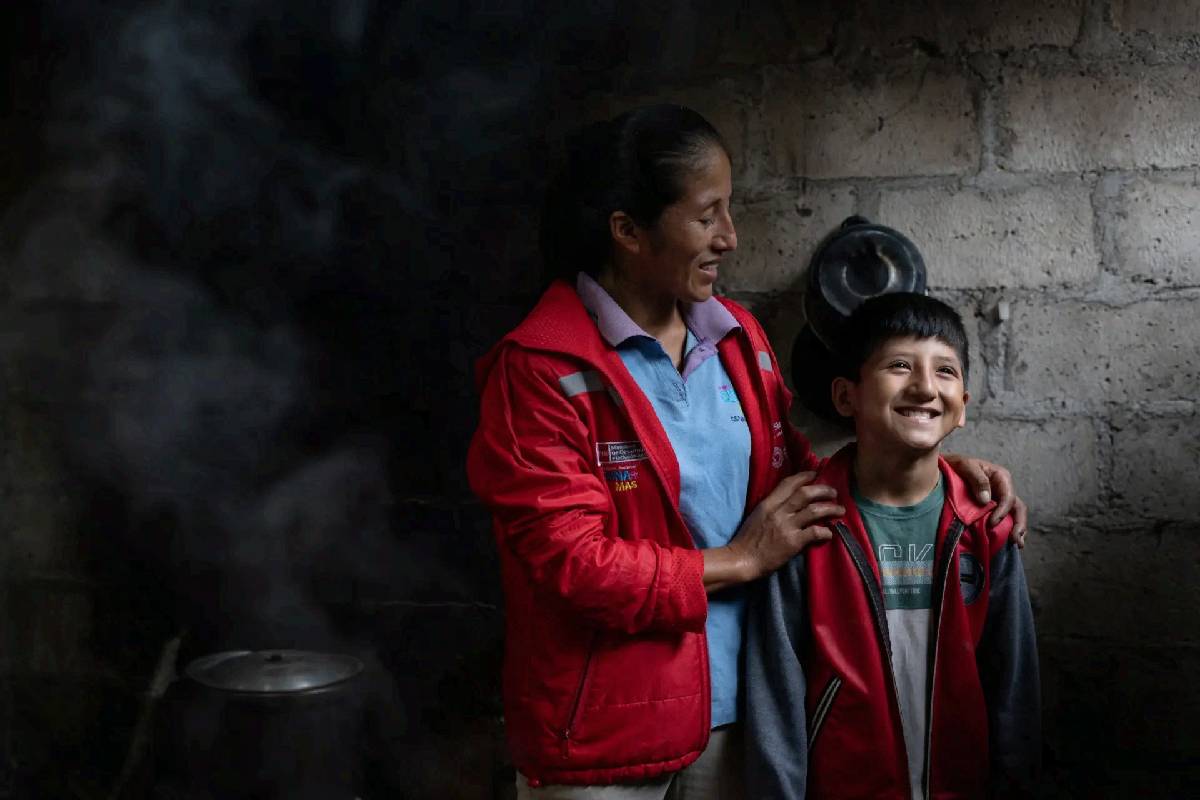
Child poverty remains a pressing global challenge, undermining children’s rights, health, education, and future opportunities. Despite significant progress in reducing child poverty since 2000, momentum has slowed, particularly due to the COVID-19 pandemic, climate crises, and rising conflicts. The impact of these challenges has been further exacerbated by the ongoing cuts to global aid. This year’s State of the World’s Children report from UNICEF highlights the urgent need for coordinated, evidence-based action to reverse setbacks and accelerate progress.
The impact of child poverty
Poverty has devastating effects on children – claiming lives, impairing health and development, and limiting learning. This is a huge challenge considering almost one in five children globally are living in extreme poverty. Adults who grew up in poverty face weaker job prospects, shorter lifespans, and are more likely to face mental health issues. Societies suffer as poverty erodes economic prosperity, social cohesion, and hope, creating conditions for violence and extremism.
Globally, nearly 412 million children live in extreme monetary poverty, surviving on less than $3 per day. Children are twice as likely as adults to experience extreme poverty, with Sub-Saharan Africa (76%) and South Asia (12%) accounting for 88% of children in extreme poverty. Beyond monetary measures, over half of children in low- and middle-income countries face severe deprivation in areas like education, health, housing, nutrition, sanitation, and clean water.
Progress and challenges
Since 2000, the number of children living in severe deprivation has fallen by a third, driven by strategic actions such as cash assistance, expanded public services, and prioritisation of child rights. However, progress has stalled in recent years, particularly in Sub-Saharan Africa, where extreme child poverty rates remain unchanged. The COVID-19 pandemic halted progress globally, and recovery has been slow.
Three pressing crises—climate change, conflict, and funding shortfalls— exacerbate child poverty:
• Climate hazards disproportionately affect children, with one billion living in high risk countries. Compared to the 2000s, UNICEF projects that in 2050s, eight times more children will be exposed to extreme heatwaves, and two to three times more children will be exposed to flooding and wildfires. Climate hazards and poverty and intertwined, and it is estimated that climate change could force up to 100 million people into extreme poverty by 2030.
• Rising levels of conflict have displaced millions, disrupted education, and exposed children to violence. In the last two years, the world has experienced the highest number of countries engaged in armed conflict since World War II, which means that 19% of children worldwide lived in conflict settings in 2024. This resulted in 41,370 verified violations against children in conflict in 2024, a rise of 25% from 2023.
• Meanwhile, debt distress and declining international aid have forced governments to cut essential services for children. Global public debt rose to an unprecedented 92.3% of GDP in 2024 and could reach 117% by 2027. 53% of low-income countries are at high risk of debt distress. This means 3.3 billion people including 400 million children live in countries that spend more on debt repayments than on health or education. On the other hand, international aid, which used to provide a lifeline for many low-income countries, is now increasingly under threat. Global ODA is expected to decrease by 18% in 2025 and by 27% in 2026, and a large portion is expected to continue to be spent in donor countries on in-donor refugee cost. UK ODA is a key driver of this trend, with the 40% cut potentially result in UK child focused aid being less than a half what it was in 2019.
Editor’s Note: The rest of this report is about UNICEF’s work in the UK, the UK child poverty situation and recommendations to the UK government on how to prevent things going backwards due to funding cuts. The implications and what is needed are universally applicable, however.
SOURCE: UNICEF’s State of the World’s Children Report 2025: Ending Child Poverty: Our shared imperative.