


by Laura Rosso
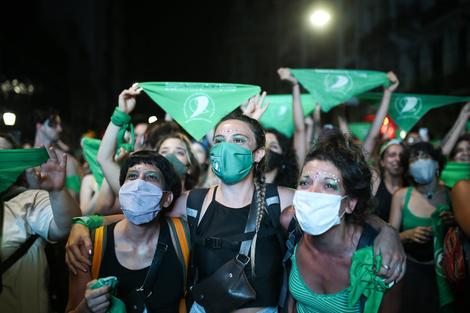
Five years after the outbreak of that first June 3rd, the sustained and collective struggle that brought the debate to the forefront of society celebrated the passage of Law 27.610 on the Voluntary Termination of Pregnancy. A triumph of the tireless work of transfeminist activists, women’s gatherings, the Campaign for the Right to Legal, Safe and Free Abortion (which was born at a gathering), and the sustained outcry of the girls who rallied together, bathing the Argentine streets in glitter.
Following debate in the Senate, Law 27.610 on the Voluntary Termination of Pregnancy was passed on December 30, 2020. This law, which reflected the demands of the feminist movement, spanned several decades and began to be incorporated into everyday conversations as a matter of public health and rights, starting in 2015.
This is what Valeria Isla, former national director of Sexual and Reproductive Health and former general coordinator of Plan ENIA (2019-2023), points out: “In 2015, we were coming from the FAL Ruling (2012), the extension of ILE (Legal Termination of Pregnancy) coverage and the use of misoprostol for safe abortions, 13 years of the sexual health law and 9 years of the ESI (Comprehensive Sexual Education) law, and the free purchase and distribution of contraceptives and condoms through the REMEDIAR program. A sustained struggle by the women’s and diversity movement for decades. And Ni Una Menos (Not One Less) was key to generating articulation with other demands and slogans in the public space, including the right to abortion.”
The green scarf was a symbol of a struggle that crossed borders and embraced both the feminists of the last decades of the 20th century, as well as the adolescents who, on the night of August 13, 2018, remained in the streets until the Senate rejected the Voluntary Interruption of Pregnancy (IVE) bill with 38 votes against, 31 in favour and 2 abstentions.
Mariana Romero, a doctor and member of Proyecto Mirar, says the struggle took to the streets, as part of Ni Una Menos. “The first guidelines, the FAL ruling, and the 2018 debate were extremely important turning points. The passage of the law is the result of a long time, patience, and commitment from the struggle of women’s movements, the National Campaign for Legal, Safe, and Free Abortion, civil society, health teams, and women’s advocates. It was built little by little, seeking steps that would strengthen rights, access, and decisions. We demanded accountability, we demanded compliance with the grounds, we demanded legality. I believe it was (is) a democratic process that was built collectively, with a lot of conversation, and that brought the discussion to multiple spaces.” Without a doubt, achieving the law involved a powerful network of articulations and struggles. The Mirar Project, in its section “It’s Much More Than an Abortion,” analyzes how the passage of Law 27,610 transformed the social, political, and healthcare life of Argentina and its population. The report shows that hospitalizations due to abortion complications in the public subsector fell from 52,817 in 2010 to 33,525 in 2020, representing a 36% drop in a decade. The reasons for this decline are associated with increased information on the possibility of safely terminating a pregnancy using misoprostol, risk and harm reduction policies through the implementation of pre- and post-abortion counselling, and a policy of access to legal abortions.
“Ni Una Menos is the wisdom of a movement that knew how to summon us and attract us en masse to the streets, mainly against the femicides of 2015, and with a programmatic expansion in the following years”; explains Ruth Zurbriggen, activist of La Revuelta Colectiva Feminista and Socorristas en Red, and asks: “How can we think of Ni Una Menos – even with the internal controversies that there were and are – without thinking of it as a process in which feminisms made contact and radiated plural and popular capillarity through our arguments, practices and demands?” For Ruth, the outbreak of street occupation, the intergenerational politicization of violence, the collective impact that challenged sexist and patriarchal subjectivities was what “connected us in a different way with our bodies to give ourselves our own voices, to organize ourselves, to feel ourselves, to touch ourselves, to become increasingly aware that we were causing something unusual: Now that they see us, now that we are together…”
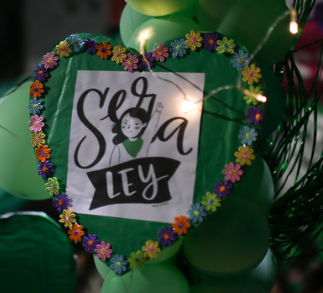
There will be law.
Valeria returns to 2020 and the milestone of the law and the challenges of generating public policy: “It had to do with supporting health teams, publishing care protocols to guide the implementation of the law with the highest quality standards, promoting training spaces, misoprostol and mifepristone, which are medications for safe abortions, the 0800 sexual health service, the emphasis on users, the ENIA Plan changing the lives of thousands of adolescents, and the production of information.”
The regressive landscape of rights
However, with Milei’s victory, the attempt to undermine the right to abortion and the regressive landscape of rights is increasingly brutal. Mariana Romero points out that at the end of the previous administration and in early 2024, all existing sexual and reproductive health supplies were distributed. Subsequently, she adds, there were no deliveries, and the provinces began urgent purchasing processes. “Without a planned and gradual strategy that prioritizes people’s needs and focuses on equity, the response is segmented and generally inefficient. Its impact cannot yet be measured.” In that sense, Ruth observes that the right to abortion is much more than that. “The IVE law is already undermined. They’ve put a stop to any public policy supporting it, so the guarantees of this right are left to the goodwill of provincial governments, and we already know that if anything characterizes our country, it’s the inequalities in access to basic rights like health, education, work, and housing. Destroying a public policy like the one initiated after Law 27.610 was passed also implies breaking community ties. Or it contains a vengeful desire to break them.”
For all these reasons, networks of companions are so essential. Because they not only ensure that the law is upheld but also that these abortions are carried out safely. “In this time of rapidly accelerating regression, it is more necessary than ever to organize activist projects for community and feminist health,” Ruth points out. SenRed insists on guaranteeing what has been achieved, while also pushing for “political practices that build other ways of living in this world, which insists on making our lives increasingly difficult. Affective ways, ways that register others, ways in which we revitalize the hope of knowing that we are sustaining each other in difficult times.”
To close, sociologist and researcher Nayla Vacarezza (Conicet-UBA) brings up Milei’s quotes from a few days ago regarding the obsession with the falling birth rate: “The president not only distorts reality when he states that ‘now the fear is that the world will run out of people,’ or that ‘they went too far in attacking the family,’ or when he talks about ‘murders in the womb of mothers.’
What he does is deliberately construct the feminist movement as an enemy and as responsible for a supposed demographic and moral crisis that justifies the dismantling of public policies won after decades of tireless struggle. Therefore, it is important to continue responding to this insidious authoritarian imagination with more and more feminist imagination, like that cry against sexist violence that is Ni Una Menos and that is nourished by decades of struggles, symbols, and practices that created new ways of feeling and thinking about abortion, sexuality, and reproduction. Feminisms patiently built expressive and political repertoires that transformed stigma into pride, clandestinity into solidarity, and pain into transformative power.”
SOURCE: Página 12, by Laura Rosso, 11 June 2025. (In Spanish).
SEE ALSO: Página 12. A supplement on Ni Una Menos (Not one less). 4 June 2025. (In Spanish).