


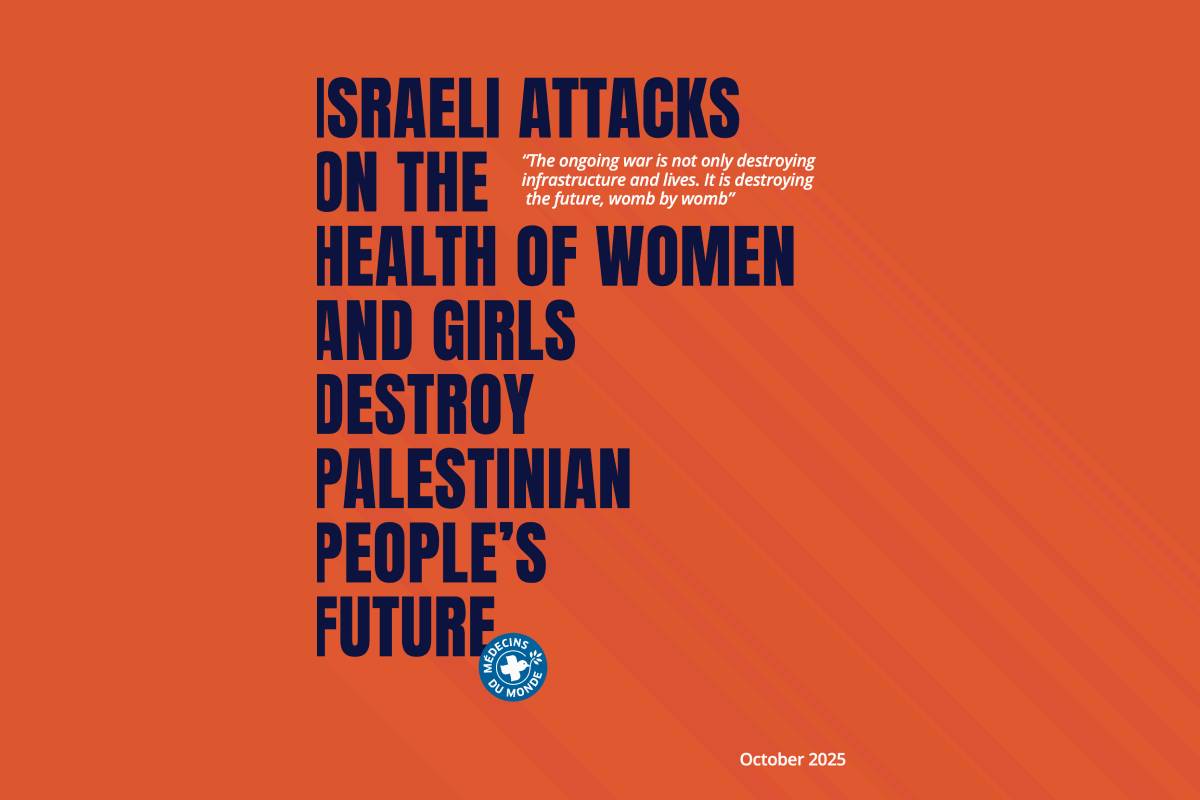
This report (in French and English) is the new Médecins du Monde (MdM) report on the restricted access to SRHR services and the consequences for women’s, girls’ and newborns’ health in the Gaza Strip (October 2025). Between May 2024 and August 2025, MdM witnessed repeated attacks on health centres and a dramatic shortage of staff and essential supplies in Gaza.
In the context of continuous attacks, communities’ displacement and appalling living conditions, access to SRHR and in particular prenatal care, emergency obstetric services, family planning, and protection against sexual and gender-based violence has been severely hampered. Malnutrition, displacement, disrupted care, and lack of access to menstrual hygiene products severely worsen women’s health and put the lives of their infants at risk.
Between May 2024 and August 2025, MdM observed:
- A sharp increase in genital infections with potential long-term effects on infertility, chronic pelvic pain and recurrent pelvic inflammatory disease, ectopic pregnancies, and cervical cancer from persistent high-risk HPV infections;
- An 8-fold increase in high-risk pregnancies
- A high prevalence of menstrual disorders
- A decrease of the above effects during the January-March ceasefire period, proving the impact of war and blockade of humanitarian assistance on women and girls’ health.
The report stresses that the disproportionate effects of Israeli military attacks on women and girls’ health could be considered “causing serious bodily or mental harm to members of the [Palestinian] group” and to some extent “imposing measures intended to prevent births within the group” as per article 2 of the Convention on the Prevention and Punishment of the Crime of Genocide. These consequences could reversed by the cessation of hostilities and the large influx of humanitarian aid.
Raneen, a midwife at Médecins du Monde, described the case of a 12-year-old girl who came to Al-Bahar Clinic asking for sanitary pads. At that time, the price of a pack of pads was $15 and far beyond what her family could afford. The girl’s family is displaced and living in very difficult financial and humanitarian conditions. She has four sisters and, together with their mother, all six of them are of menstrual age. The girl repeatedly visited the clinic to ask for pads. On one occasion, her mother came with her and told the midwife that she was forced to cut up pieces of her clothes and use them as a substitute for sanitary pads to cope with their needs.
Outcomes identified
1.Increase in genital infections
2.Reduction in antenatal care and consequences of sharp increase in pregnancy complications
3.Devastating impact of malnutrition and famine on maternal health
4.Dramatic increase in miscarriages among displaced women and girls
5.High prevalence of menstrual disorders
6.Women are giving birth in unhygienic conditions, without skilled attendants, pain relief or postnatal care. Some are forced to cut their umbilical cords under fire
“The ongoing war is not only destroying infrastructure and lives. It is destroying the future, womb by womb.”
Recommendations
Médecins du Monde continues to advocate for an immediate and permanent ceasefire and the protection of civilians.
> All attacks on medical infrastructures and personnel must stop immediately.
> All crossing points must be reopened to ensure large scale humanitarian aid is available in Gaza, including restoring access to safe drinking water in sufficient quantities, medical equipment and all basic drugs.
> Third States have a responsibility to use all measures in their power to prevent the destruction of the Palestinian people in Gaza.
> Sexual and reproductive health services must be prioritised as much as possible within the current circumstances by the humanitarian community.
-Médecins du Monde has been working throughout the occupied Palestinian territory for more than 20 years with a team of 120 people in Gaza and 78 in the West Bank.
SOURCE: Report SRHR Gaza-ENG.pdf. Also available in French.