


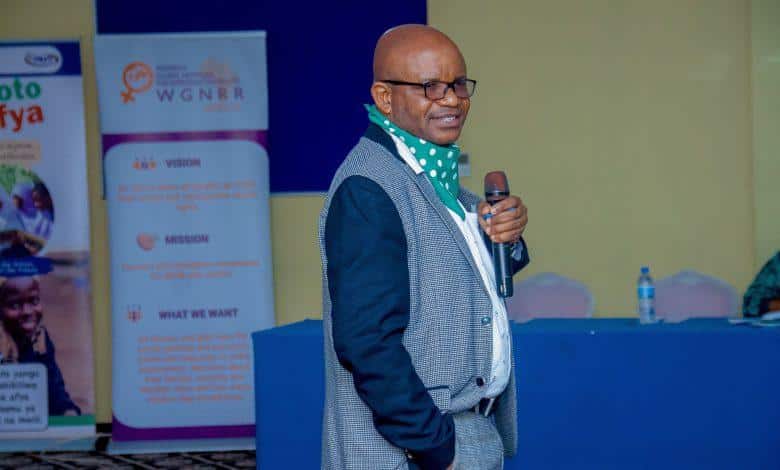
WGNRR Africa Regional Director Nondo Ejano
As the world marks International Safe Abortion Day on September 28th, the Women’s Global Network for Reproductive Rights Africa (WGNRR Africa) and its partners met in Dar es Salaam and called for collective voices for change so that the nation gets access to rights on safe abortion for women and girls.
They discussed issues related to the promotion of safe, legal, and accessible abortion services and advocacy for sexual and reproductive health and rights (SRHR) and said this day carries profound significance in the ongoing struggle for women’s rights and the pursuit of gender equality.
Nondo Ejano, Regional Director of WGNRR Africa, said: “This year, we are also highlighting how we can collect our voices for change because unsafe abortion is preventable. We are celebrating diverse young people and how they are fearlessly taking and creating spaces and employing innovative advocacy strategies to champion safe abortion rights and reproductive justice.
He pointed out that “28 September is deeply rooted in the global movement dedicated to advancing women’s reproductive rights and promoting gender equality, and that it plays a vital role in raising awareness on a global scale, shedding light on the alarming prevalence of unsafe abortions and the severe consequences they entail. It also emphasizes the urgent necessity of ensuring universal access to safe abortion services.”
He noted that while Tanzania is a signatory to the Maputo Protocol, current legislation only allows abortion to save the life of the mother. It has not adopted legislation that would allow abortion in cases of pregnancy from rape, incest, or risk of harm to the mental and physical health of the mother. Yet according to a study conducted by the Guttmacher Institute and partners, Tanzania’s abortion rate was 36 per 1,000 women aged 15–49 and the majority of abortions were unsafe, with nearly 67,000 women being treated in health facilities for post-abortion care.
Peter Majanjala, legal consultant and an Advocate of the High Court said they were in court challenging the restrictive law. He further said that under the Tanzanian penal code, health practitioners who perform illegal abortions may receive sentences of up to 14 years in prison, while those who procure abortions for themselves may be sentenced to up to seven years in prison.
The day-long event was attended by SRHR Allies, health and legal professionals, survivors of unsafe abortion, civil society organisations, media personnel and youth champions.
SOURCE: The Guardian: IPP Media, 30 September 2024.
+++
Safe abortion in Tanzania: A call for change
SAFE abortion is not commonly accepted in Tanzanian society, where many cultural norms oppose it. However, have you ever considered the plight of women who become pregnant due to rape? Do you think they want to carry those pregnancies to term?
Across our communities, various scenarios underscore the urgent need for laws that allow victims, or any woman unable to carry a pregnancy to term, to access safe abortion services without facing judgment or misunderstanding.
Tragically, many deaths in our communities stem from unsafe abortions, he said, but unsafe abortions can be effectively reduced through collective advocacy, particularly by engaging the Ministry of Health and the Ministry of Constitutional and Legal Affairs. He also stressed the importance of community awareness regarding the availability of safe abortion services in healthcare facilities.
Sitti Shio, Advocacy Specialist from Pathfinder International, advocated for the inclusion of safe and legal abortion education in school curricula alongside HIV/AIDS and reproductive health. “Everyone deserves access to information about safe abortion, especially adolescents who are vulnerable to unintended pregnancies,” Ms Shio stated, emphasising the need to dismantle stigma in our communities.
Advocate Ziada Mkwazu highlighted the necessity for coalitions to promote the right to safe abortion for women in various circumstances. “Law reforms are crucial, along with clear guidelines for healthcare providers to safely perform abortions for those in need, in order to reduce deaths from unsafe procedures in our communities,” she stated. “Youth engagement is also vital, as many young people face unwanted pregnancies and resort to unsafe abortions.” Lilian Luguga emphasised that adolescents need accurate information about reproductive health, including safe and unsafe abortion methods. “We need open platforms to discuss these issues and seek professional guidance, fostering a health care environment that is friendly and accessible to youth,” she said.
SOURCE: Daily News Tanzania, by Esther Kassanga, 6 October 2024 + PHOTO above.