


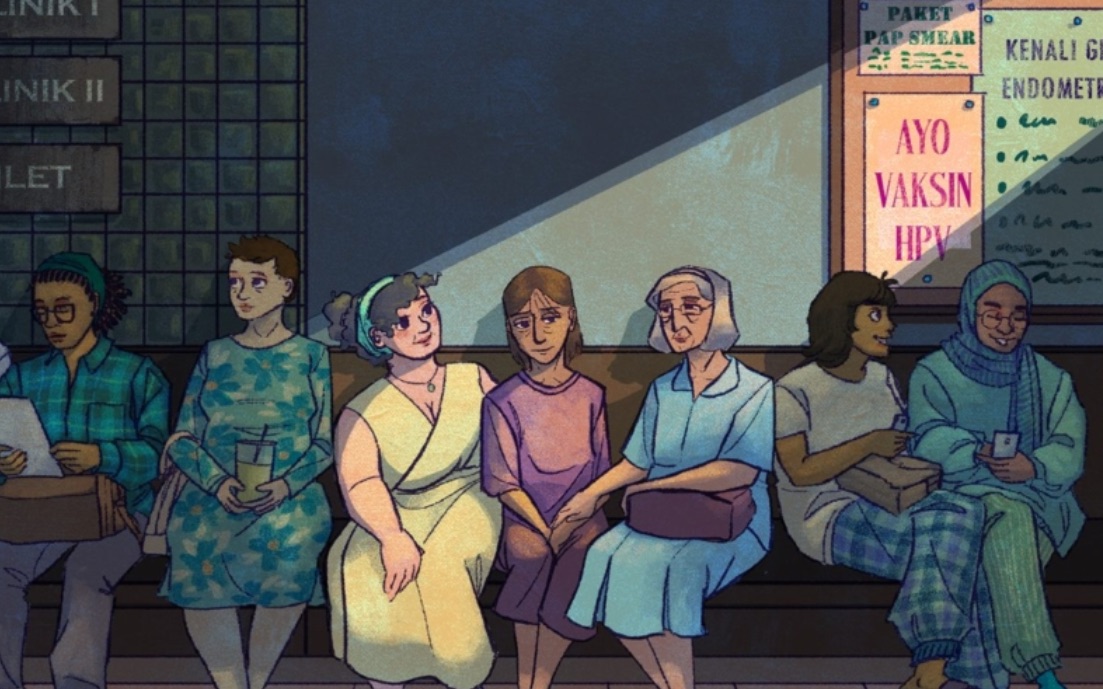
Every 28 September, the world commemorates International Safe Abortion Day as part of a campaign for the decriminalisation of abortion worldwide. This year’s commemoration came as the global abortion movement is moving beyond the slogan of ‘pro-choice’ toward a broader reproductive justice approach.
This shift recognises that not all women can decide whether to have children. Economic, political and social conditions can create barriers that limit people’s reproductive choices. As a result, the pro-choice framework alone may not fully address the experiences of poor and marginalised groups.
The new reproductive justice framework therefore takes a broader approach.
Choice as a privilege
Access to safe abortion is not only about having the right to choose. It is also about ensuring that people can exercise their reproductive autonomy equally and with dignity, by addressing the social and structural barriers that limit their choices.
The problem of unintended pregnancy remains common in Indonesia, with estimates ranging as high as from 10.7% to 17.5% of all pregnancies.
These pregnancies are not simply the result of ‘individual choices,’ but of structural failures including limited access to contraception, weak sexual and reproductive health education, and inadequate services for survivors of sexual violence.
Moreover, unwanted pregnancies have been confirmed to be associated with low levels of education, poverty, rural residence, inaccessibility of health facilities, and poor knowledge.
Sexual violence
Providing safe abortion care is important not only to address unintended pregnancies, but also to ensure that survivors of sexual violence can access the abortion healthcare they need as part of reproductive justice.
Sexual violence is widespread in Indonesia. The National Commission on Violence against Women (Komnas Perempuan) recorded 22,848 cases of sexual violence in 2025, and 103 rape cases resulting in unintended pregnancies between 2018 and 2023.
Unwanted pregnancy can add to the trauma for survivors of sexual violence. Forcing victims to continue their pregnancies can cause further serious harm. Yet, in Indonesia, policies on abortion and its implementation remain problematic, and do little to support victims of sexual abuse.
There was slight progress made in Indonesia’s abortion regime with the enactment of Law 36 of 2009 on Health. Under this statute, abortion was still a criminal offence, but it became legal in very limited cases, such as medical emergencies and for rape victims with a pregnancy below six weeks.
The law on abortion became more progressive yet in 2022, with the passing of the new Criminal Code, which revised the previous provisions on abortion. Under Article 463(2) of the new Code, abortion is now allowed in two expanded situations: first when a pregnancy results from sexual violence (not just rape) and this can apply up to 14 weeks’ gestation; and, second, when the pregnancy involves a medical emergency (regardless of weeks of gestation).
In 2023, the Health Law was amended to echo these new provisions in the Code.
Health care, not a crime
Public officials have described these changes as progress, but the government has not committed to implementing the new policies, and, in any case, there are still three major problems with the law as it stands.
First, the new provisions on abortion in the new Criminal Code still treat abortion as a criminal offence rather than a healthcare service. Abortion is generally prohibited, with only limited exceptions that can be difficult to access in practice, because of the criminal provisions in the Code and a range of administrative obstacles (explained below).
In other words, rather than treating abortion as an essential health service, the law continues to approach it through criminalisation and punishment.
Second, the government has not yet established a clear system for providing safe abortion services. Under the previous 2009 Health Law and its implementing regulation, Ministry of Health Regulation 3 of 2016 on Training and Provision of Abortion Services for Medical Emergency Indications and Pregnancy Due to Rape. Under the article 13 of this regulation, the Ministry of Health is responsible for appointing healthcare facilities authorised to provide safe abortion services. However, the Minister still has not officially appointed even one.
Despite this, findings from ICJR in 2021 and Project Multatuli in 2023 show that some specialist doctors do, nonetheless, provide abortion services. This means that safe abortion services may be available through informal or underground practices, but only to those who can find them – and afford them.
Without officially designated facilities and a clear system, access to safe abortion remains unequal. It is certainly not guaranteed for everyone.
Laws undermined by implementation
Third, as mentioned, the provisions on abortion in the new Criminal Code were copied into the new Law 17 of 2023 on Health. However, the rules for accessing abortion care have become more complicated because of implementing regulations under the new Health Law.
Minister of Health Regulation 2 of 2025, for example, limits abortion services to advanced healthcare facilities, and requires them to be provided by obstetrics and gynaecology specialists. Survivors of sexual violence must also be certified as victims of sexual violence, for example, by providing a police Surat Keterangan (certificate).
Unfortunately, these requirements are more onerous than under the previous regulations. Previously, primary healthcare facilities could provide abortion services, and rape survivors could access abortion by providing an examination certificate from a psychologist rather than a certificate from the police.
The more the requirements survivors have to meet, the greater the risk of delays in accessing care. For survivors of sexual violence, such delays can make it harder to obtain timely and safe abortion services, or, indeed, obtain them at all. Moreover, there is the common problem of police corruption that can make it difficult for victims to obtain certification.
Finally, the most fundamental problem with Indonesia’s current abortion policy is the lack of commitment to ensure that the law is properly implemented. Although the law became more progressive with the passing of the new Criminal Code, implementing regulations under the reforms undermine it. Change on paper alone is not enough without a system that allows people to access safe abortion care.
A robust system for safe abortion
As mentioned, the new Criminal Code allows abortion for victims of sexual violence up to 14 weeks of pregnancy. This creates an opportunity for Indonesia to develop a system that includes medical abortion, that is, using medication to end a pregnancy.
According to WHO guidance, mifepristone and misoprostol can be used for medical abortion. For pregnancies up to 12 weeks, abortion can generally be managed through access to these medicines, with support from a healthcare provider when needed. This is commonly referred to as ‘self-managed abortion’.
These methods can provide safe and effective abortion and help reduce the risk of complications. However, Indonesia still does not allow the circulation of mifepristone and has not registered misoprostol specifically for abortion care. As a result, the legal right to abortion is not matched by practical access to the medicines needed to provide safe abortion services.
Regardless of the recent law reforms, Indonesia still does not have a system that fully supports safe abortion as part of reproductive justice. Barriers exist both in the law and in how the law is applied. Abortion is recognised by the WHO as essential healthcare, but restricted access means unintended pregnancies continue in Indonesia.
Globally, around 45% of abortions are unsafe, with most occurring in developing countries. Indonesia is no exception. Restrictive abortion laws can create unequal access: people with greater financial resources may be able to find safer options, while those with fewer resources and members of other marginalised groups may face greater health risks and the possibility of criminal prosecution.
If Indonesia is serious about reproductive justice, it needs yet more legal reform. Abortion should be fully decriminalised, unnecessary administrative requirements should be removed, and primary healthcare facilities and general practitioners should be able to provide abortion care.
Access to safe abortion medication should also be ensured in line with WHO guidance.
SOURCE: Indonesia at Melbourne, by Maidina Rahmawati, 29 October 2026. Illustration from Project M/Sekarjoget.