


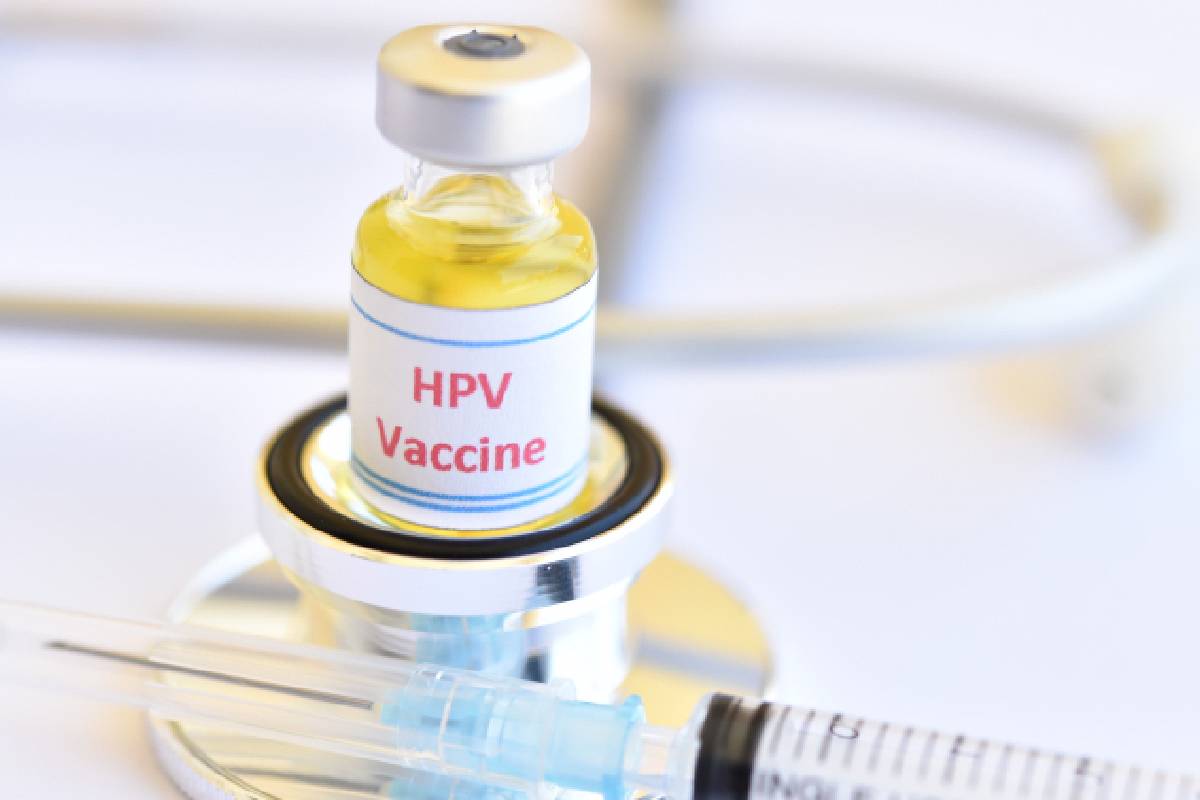
Cervical cancer mortality trends following HPV vaccination in England, 2001-24; an analysis of population-based mortality data
by Prof Peter Sasieni, PhD; Milena Falcaro, PhD
The Lancet, 17 June 2026, Open access
Summary
Background – Human papillomavirus (HPV) vaccination is a key component of global cervical cancer elimination strategies. While substantial declines in cervical cancer incidence have been observed in several countries, evidence of its effect on mortality is scarce. England introduced a national HPV vaccination programme in 2008 for girls aged 12–13 years (achieving 80–90% coverage before the COVID-19 pandemic), with a catch-up campaign in 2008–10 for girls aged 14–18 years. We aimed to investigate trends in cervical cancer mortality and to estimate the reduction in cervical cancer deaths in young women in England following the introduction of HPV vaccination.
Methods
We analysed population-based cervical cancer mortality data from England between 2001 and 2024 among women aged 20–24, 25–29, and 30–34 years. HPV vaccination coverage by birth cohort was obtained from official reports and used to estimate, for each age group and calendar year of death, the proportion of women who had been vaccinated. We plotted observed and adjusted age-specific mortality rates against year of death and overlaid a smoothed curve. Poisson regression applied to the numbers of deaths was used to estimate the relative risk reduction in vaccinated women compared with what was expected in the absence of vaccination, assuming no herd immunity. Confidence intervals were obtained by inverting the likelihood ratio test.
Findings
In women aged 20–24 years between 2020 and 2024, in whom vaccination coverage was around 88–90% at age 12–13 years, no deaths occurred, compared with 23·1 expected deaths based on historical rates, corresponding to a mortality reduction of 100% (95% CI 84–100). In earlier birth cohorts, who were offered vaccination up to age 18 years with coverage of around 63–87%, mortality reductions of 80% (51–94) in women aged 20–24 years in 2015–19, and 69% (55–79) in women aged 25–29 years in 2020–24 were observed. The relative risk reduction in vaccinated women was estimated from population-level data to be 100% (95% CI 81 to 100) in women aged 20–24 years, 100% (89 to 100) in those aged 25–29 years, and 63% (–13 to 100) in those aged 30–34 years. Up until the end of 2024, HPV vaccination in England was associated with a reduction of around 199.6 cervical cancer deaths (95% CI 125·0–274·2).
Interpretation
Our findings provide the first robust national-level evidence, albeit observational, that high HPV vaccination coverage is associated with a substantial reduction in cervical cancer deaths. This is shown by the substantial decrease in cervical cancer deaths observed among women aged 20–29 years in England, particularly among those vaccinated at ages 12–13 years. These findings support the achievability of the WHO goal of eliminating cervical cancer as a public health problem, and efforts should be made to achieve high vaccine uptake among young adolescents globally.
Introduction
Human papillomavirus (HPV) vaccination is one of the three pillars of WHO’s global strategy for the elimination of cervical cancer1 and is currently included in national immunisation programmes in around 150 countries worldwide. Several countries have reported substantial falls in cervical cancer incidence following HPV vaccination, but there is little evidence of the effect of HPV vaccination on cervical cancer mortality. One research letter reported a steep decline in cervical cancer mortality in the USA in women aged younger than 25 years: 31 deaths occurred between 2016 and 2021, which was 26 fewer than the number projected from past rates.
A school-based HPV vaccination programme has been in place in England since September, 2008. The routine programme targets girls aged 12–13 years, with boys of the same age included since 2019. A catch-up programme to vaccinate girls aged 14–18 years was implemented in 2008–09 and 2009–10. The high vaccination coverage (of around 90% for one dose before the COVID-19 pandemic) resulted in a large decrease of up to 87% in cervical cancer incidence in cohorts targeted by vaccination, particularly in those targeted before age 16 years. However, until now, the effect of vaccination on cervical cancer mortality has not been empirically assessed.
Putting the Lancet research in an historical context:
Evidence before this study
Human papillomavirus (HPV) vaccination has been shown in randomised controlled trials to prevent persistent HPV infection and high-grade cervical intraepithelial neoplasia. Observational studies have also provided robust evidence that, in real-world settings, cervical cancer incidence has been reduced both in women vaccinated against HPV and in cohorts with high levels of HPV vaccine uptake. However, to date, very little empirical data have shown that HPV vaccination reduces deaths from cervical cancer. We used ChatGPT to search for “papers that report reduced cervical cancer mortality following HPV vaccination”. It yielded one research letter on trends in cervical cancer mortality in the USA in women aged 20–24 years, two studies linking HPV vaccination to reduced cervical cancer incidence, and two modelling studies that predict mortality reductions. We then searched PubMed for papers citing the research letter. This search returned ten papers, none of which provided further evidence on cervical cancer mortality following HPV vaccination. An additional search in PubMed using “(HPV vaccination) AND (cervical cancer) AND (mortality OR deaths) AND rates” restricting to “clinical study” or “clinical trial” or “observational study” identified 15 papers; however, these papers did not report on the observed impact of HPV vaccination on cervical cancer mortality.
Added value of this study
This study shows substantial reductions in cervical cancer mortality in England among women aged 20–29 years following the introduction of the national HPV vaccination programme. The lower limit of the 95% CI for the relative reduction in the risk of death from cervical cancer in vaccinated women is over 80% in the 20–24 years and 25–29 years age groups. No deaths from cervical cancer among women aged 20–24 years occurred in England during the last 5 years of our study follow-up (2020–24).
Implications of all the available evidence
These data suggest that HPV vaccination programmes for adolescent females can lead to reduced deaths from cervical cancer, reinforcing the importance of achieving and maintaining high vaccination coverage, particularly in females aged 12–15 years (while most are still sexually inactive)… [….article continues at length in the Lancet 17 June 2026 when these authors appear to have no idea that anything has been studied or published, or any services provided for boys to treat HPV and prevent HPV-related cancers in girls and boys….]
+ + + +
More about human papillomavirus
by Marge Berer
Meanwhile, the journal Reproductive Health Matters (RHM), of which I was the founder editor in 1992 through 2015, published an article by Tamara Kubba in November 2008, entitled “Human papillomavirus vaccination in the United Kingdom: what about boys?”. Here is the abstract from that article:
Abstract
“In September 2008 the UK Department of Health initiated a human papillomavirus (HPV) immunisation programme for girls aged 12–13 for prevention of cervical cancer, which is most often caused by two HPV types. An important question, yet to be addressed, is whether boys should also be vaccinated. Men also get HPV and transmit it sexually, not just women. Certain HPV types are associated with genital warts, which have significant morbidity, and with difficult to treat non-cervical malignancies, including vulval, penile, anal and oro-pharyngeal cancer, which are best prevented through vaccination. Moreover, increased persistence of HPV infection is associated with HIV infection. A review of the literature and evidence from modelling suggest that vaccinating boys would increase vaccination impact and may be necessary to achieve herd immunity targets. Excluding boys sends the wrong message that girls and women alone are responsible for sexual health. Although protective efficacy of the vaccine in men has not yet been fully established, the rationale for vaccinating boys as well as girls at an early age is strong, assuming efficacy is established. Meanwhile, provision of the quadrivalent vaccine should become UK policy, in order to include protection against genital warts, the argument for which is greatly strengthened if boys are also vaccinated.”
SOURCE: Tamara Kubba, Human papillomavirus vaccination in the United Kingdom: what about boys? Reproductive Health Matters, 2008. pp.97-103. (Tamara wrote this paper while she was a final year medical student at the Royal Free and University College Medical School, University College London, UK.
+ + + +
Today, 24 June 2026, I was scrolling through a journal called Human Vaccines & Immunotherapeutics, Vol.22, 2026 – Issue 1, and found an article entitled:
Serious adverse events following human papillomavirus vaccination: A systematic review and meta-analysis of post-marketing evidence, by Hannah Brown and Sharifa Nasreen,
published online by Taylor& Francis on 27 February 2026
In spite of the title, I didn’t need to worry about adverse events for more than a few minutes, however, because the abstract stated: “Of the 258 identified records, 24 articles were included in the systematic review: 15 in the meta-analysis and 9 in the narrative synthesis. Among the studies included in the meta-analysis, four found no serious adverse events (SAEs) The pooled rate of SAEs in 14 studies that reported total number of doses distributed was 0.04 (95% CI: 0.00, 0.35) per 1000 doses, I2 = 99.98%. No consistent evidence of any increased risk of SAEs with HPV vaccination was found in the nine studies included in the narrative synthesis. However, an increased risk of celiac disease was observed, likely due to diagnostic unmasking rather than a causal association, warranting further investigation. Our findings provide evidence that SAEs remain rare following HPV vaccination. Nevertheless, continued surveillance and improved standardization of SAE definition and reporting are essential to strengthen post-marketing safety monitoring and counteract vaccine misinformation.”
Considering that HPV vaccination has more or less eliminated cervical cancer in girls who were vaccinated young, and has reduced many other cancers as well since it began to be offered to adolescent boys, all I could say was: “Whew!”
Still, I searched for more recent information. Here is another article I found:
REVIEW ARTICLE
Recent advances in human papillomavirus vaccines and therapeutic strategies: Combating cervical and non-cervical cancers
Genes & Diseases, Volume 13, Issue 3, May 2026, 101880
Science Direct: Recent advances in human papillomavirus vaccines and therapeutic strategies: Combating cervical and non-cervical cancers
https://www.sciencedirect.com/science/article/pii/S2352304225003691
by Md Rezaul Islam, Abdur Rauf, Most Nazmin Aktar, and 14 others
Abstract
Human papillomaviruses (HPV) are a major cause of several cancers, particularly cervical cancer, and remain a serious public health challenge, particularly in low-resource countries. In addition to cervical cancer, HPV is linked to vulvar, vaginal, penile, anal, and oropharyngeal cancers, especially in men. The integration of HPV into the human genome plays a key role in cancer development. This review highlights the progress in HPV vaccination and new treatment approaches for non-cervical HPV-related cancers. Current vaccines provide strong protection against cervical cancer, and next-generation vaccines aim to protect against more types of cancer-causing HPV. New immunotherapy strategies, such as DNA-based vaccines and antigen-specific immunotherapy, are being developed to more effectively target HPV-driven cancers. Promising methods, such as CRISPR/Cas9 gene editing, therapeutic vaccines, and immune checkpoint inhibitors, have shown success in early research and clinical trials. Among these, DNA vaccines stand out as cost-effective and scalable solutions for treating HPV-related tumors. This review also explores the biology of HPV-related cancers, global trends, and the latest advances in prevention and treatment. To reduce the burden of HPV-related diseases, a combined approach involving vaccination, early detection, and personalized treatment is essential. Ongoing research on therapeutic vaccines, gene therapies, and immune-based treatments could greatly improve the management of HPV-related cancers, potentially lowering their global impact. Expanding these innovations in clinical practice may significantly reduce the global burden of HPV-related malignancies.
This really represents a great advance compared to 2008 and opens a door to reducing the burden of more HPV-related diseases, involving vaccination, therapies and treatments for all sexes.
Report by Marge Berer, 24 June 2026