


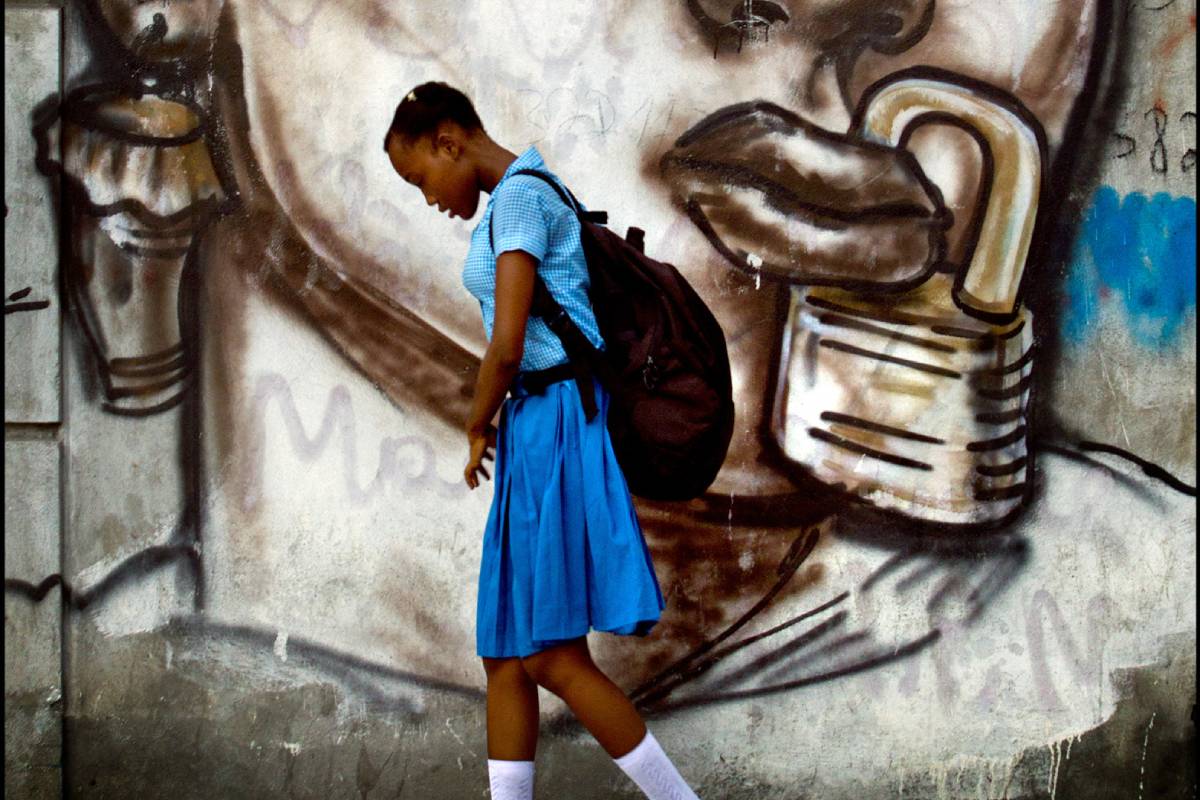
When Obunime — everyone called her Nime — died two weeks before her seventeenth birthday, silence settled on her home in a way no one had prepared for. Before that moment there had been rules and expectations, whispers and the ever-present fear of “what will people say?” After her death none of that mattered. Her parents stopped worrying about reputation. The questions that once carried judgment — whether she was wayward, how the pregnancy happened — shrank into cruelty beside the ache of loss. What remained, plain and raw, was grief.
Her mother kept saying she wished Nime had told her. “Had I known, Nime won’t have died,” she said, imagining a different ending. In the days before the end there had been hope. When Nime started waking at night in tears and clutching her stomach, her father rushed her to hospital. Doctors fought to save her. Tests were run, surgeons operated. The diagnosis was sepsis after a miscarriage, likely following an unsafe abortion. “When she gets better, we can ask her what happened,” her parents told themselves as they begged clinicians to save their child.
Surgeons removed Nime’s uterus. At 16, she lost her womb. Her father cried not only for the immediate danger but for a life he thought already diminished. Four days later sepsis won. Nime died, and her parents were left with shock and a question that should haunt us all: “So because my daughter got pregnant, her punishment should be death?”
Nime’s story is not an isolated tragedy. It is a human face pressed up against a national statistic we too often treat as abstract: more than 20,000 people die from unsafe abortions in Nigeria every year, a significant proportion adolescents and young women under 19. Numbers have a way of creating distance. They make suffering sound clinical, contained, manageable on a spreadsheet. But behind every figure is a life like Nime’s — interrupted, misunderstood, judged in life and in death.
Imagine for a moment the national response if a plane crashed and 200 people were killed. The country would be awash with headlines, investigations would follow, demands for accountability would be loud and sustained. Yet more than 20,000 deaths from unsafe abortion annually — the equivalent of over 100 such crashes — are shuffled into reports, footnotes and short commentary. Statistics alone will never capture the shame that silences girls, the laws that produce desperation, or the families left asking how it all went wrong.
The causes of these deaths are complex but avoidable. Unsafe abortion in Nigeria sits at the intersection of stigma, restrictive policy, poverty, gender inequality and inadequate youth-friendly health services. Girls are told to abstain but are rarely given comprehensive sexuality education. Contraceptives may be unavailable, inaccessible or wrapped in judgment. Confidential, non-judgmental clinical care is often out of reach. When pregnancy happens, many fear disclosure more than harm; they cannot rely on a system that punishes the very vulnerability that merits care.
Stigma is lethal. It drives girls into secrecy and unsafe choices. It reframes families and communities into corridors of accusation rather than havens of care. It keeps health workers from offering frank counselling and lifesaving services. And it ensures that tragedies like Nime’s are repeated, household by household, away from the public eye.
What, then, should we do? Saving lives requires practical policy changes and moral leadership.
Three priorities must guide our response:
First, expand access to comprehensive sexuality education and services. Evidence from around the world shows that age-appropriate sexuality education, paired with ready access to contraception and youth-friendly clinics, reduces unintended pregnancies. Education should reach schools and communities, and it must speak frankly about consent, contraception and where to seek confidential help.
Second, reduce legal and practical barriers to safe care. While broad law reform is politically contested, there are immediate steps policymakers and health managers can take. Train clinicians in non-judgmental post-abortion care; ensure emergency care protocols are followed; remove bureaucratic requirements that delay treatment; and protect patient confidentiality. These measures do not require moral endorsement of choices — they require a commitment to preserve life.
Third, confront stigma with leadership and public messaging. Religious, traditional and political leaders must stop treating young women as moral failures to be punished. Public health campaigns should promote compassion and facts, not shaming. When leaders model care instead of condemnation, communities follow.
We must also change the way we use data. Statistics are crucial for resource allocation and policy decisions, but they should not be the end of the story. Good data should compel action: fund emergency obstetric and post-abortion care, expand adolescent health services, measure outcomes and hold systems accountable. Above all, numbers should lead us to the stories, not supplant them.
Nime’s parents asked, “How did we get here?” The answer is bureaucratic, social and moral. It is the failure of an ecosystem that says girls must be pure but offers no protection; it is the legal and cultural frameworks that criminalize and stigmatize; it is the poverty that limits choices and the health system that too often turns judgmental where it should be lifesaving.
If we truly value life, we must reorient our responses from punishment to protection. Let Nime be more than a statistic. Let her be the reason we transform data into action, silence into conversation, and judgment into care. Our collective moral obligation is to ensure that no parent has to ask if their child’s pregnancy should be punished with death. To fail to act is to accept that more names will be added to the ledger.
Nime was more than a number. She was a daughter, brief as she was bright, whose loss should shame a nation into changing how it protects its girls.
SOURCE: The Daily Times Nigeria, by Ufuoma Azege, Guest Writer, 3 June 2026