


Burdens of gender-based violence, unintended pregnancy, unsafe abortion and post-abortion care
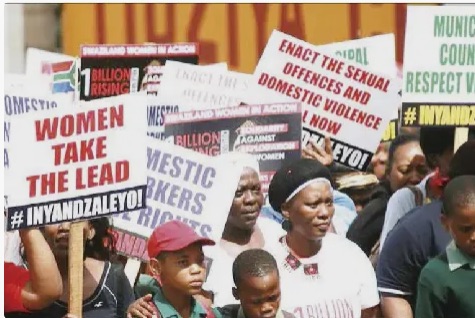
One Billion Rising Eswatini and Journey of Hope for Girls and Women in Eswatini have presented a study on the intersecting burdens of GBV, unintended pregnancy and post-abortion care in the country.
This report is not merely a collection of data points; it is a mirror reflecting the lived realities of thousands of young women and girls across our kingdom who navigate a landscape of intersecting vulnerabilities every day.
SOURCE: Pressreader, by Colani Hlatjwako, 22 April 2026
+ + + +
Call for action against unsafe abortion
MANZINI – Some women are reportedly resorting to crude instruments to commit unsafe abortions. This was among several alarming methods highlighted as being used by women to terminate unwanted pregnancies, despite the serious health risks involved.
This was among several alarming methods highlighted as being used by women to terminate unwanted pregnancies, despite the serious health risks involved.
The disturbing revelations emerged during a validation meeting on Complex Sexual and Reproductive Health held at Alcon House in Manzini. The meeting forms part of the One Billion Rising campaign, a global mass action initiative aimed at ending violence against women and gender-expansive people. A study conducted in the country found that some women resort to harmful methods such as sharp objects or foreign bodies, ingestion of toxic domestic substances, abdominal trauma and the misuse of medication through incorrect dosing in attempts to induce abortion.
The findings were presented by One Billion Rising Global Coordinator for Zimbabwe, Nyasha Sengayi, who was part of the research team.
Abandonment
The study indicated that unsafe abortions have led to severe health complications, including
haemorrhage and infection, chronic pelvic pain, infertility and cases of infanticide and abandonment.
It revealed that approximately 72.2 per cent of pregnancies in Eswatini are unintended. Among girls under the age of 18, the study found that 93.3 per cent of pregnancies are unintended.
“But why would seven per cent of girls under 18 be planning pregnancies? Further research could reveal that the about seven per cent of girls under 18 who become pregnant may be in forced marriages or are being compelled by other circumstances,” Sengayi said.
She noted that unsafe abortions are the third leading cause of maternal deaths in Eswatini. The study also found that in urban areas, 72.5 per cent of unplanned pregnancies occur within intimate partner relationships. In rural areas, 20.7 per cent of unintended pregnancies were linked to rape and sexual violence.
“Though abortion is illegal in Eswatini, most young women go to hospitals where abortion is presented as miscarriage. Sometimes healthcare providers are not able to trace the source of the miscarriage,” she said.
Abortions
The research revealed that government spends significant amounts of money treating patients who survive unsafe abortions, which are often recorded in clinics as miscarriages. Sengayi also noted that during the study, some healthcare workers indicated they do not use contraceptives because of hostility they experience from some health providers.
The facilitator said there are no accurate national statistics on abortion due to legal restrictions that discourage reporting.
“Globally, if a State criminalises safe abortion, people resort to other means, but they then present at hospitals as unsafe abortion cases. Ultimately, government bears the cost,” she said.
The study also revealed that although abortion is illegal in Eswatini, some unsafe procedures continue to take place under risky conditions. “We must come up with a way that is inherently Swati to deal with the growing unsafe abortion challenge. We want young women to be fully integrated in the development of the country. If their reproductive rights are not guaranteed, they will not participate meaningfully in national development,” she said.
The research also explored a possible link between gender-based violence (GBV) and early unintended pregnancies, as well as assessing the health system’s readiness to respond to unsafe abortion cases.
Surveys for the study were conducted at Ngonini, Matsapha and Bhunya.
SOURCE: Times of Eswatini, by Timothy Simelane, 21 April 2026.