


In Europe, more than 20 million women still do not have guaranteed access to safe abortion. This reality puts their physical health at risk and imposes disproportionate economic and emotional burdens, especially on those who are already in vulnerable situations.
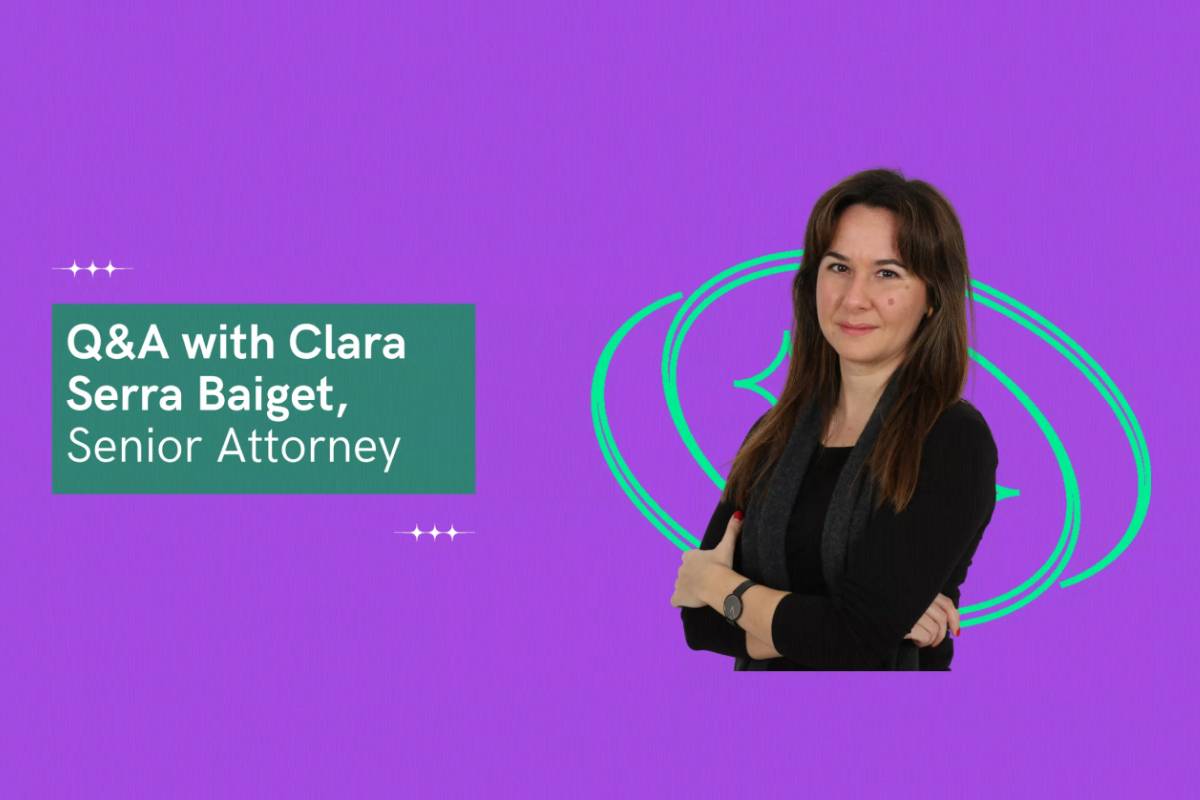
It is in this context that the European citizens’ initiative “My Voice, My Choice” has emerged—a movement seeking to transform access to abortion in the European Union (EU). We spoke with Clara, a senior lawyer at Women’s Link, to understand what this initiative proposes, what progress it has made so far, and what its limitations are.
What is “My Voice, My Choice” and what does it propose?
“My Voice, My Choice” is a social movement that defends sexual and reproductive rights in Europe. Its main objective is to reduce the profound inequalities in access to abortion among different EU countries.
Currently, in some Member States, abortion is severely restricted or even banned, forcing many women to travel to other countries to access this health service. This entails high costs and additional barriers that not everyone can overcome.
In response to this situation, the initiative puts forward two key proposals:
- Ensure access to safe abortion throughout the European Union, reducing inequalities between countries.
- Create a European financial support mechanism to cover:
- Medical costs of abortion
- Travel and accommodation expenses when travel to another country is necessary.
In short, the proposal aims to ensure that no woman is prevented from accessing a safe abortion for economic or geographical reasons.
What decisions have been made so far?
In approximately nine months, the initiative surpassed the one million signatures required for European Citizens’ Initiatives, compelling the European Commission to examine it.
Although the Commission has not created the specific fund requested by the organizers, it has made some significant decisions:
- It has acknowledged that Member States can use existing funds to facilitate access to abortion.
- It has admitted that there is unequal access to abortion within the EU, identifying it as a real and significant problem.
Why is this considered a significant step forward?
Despite its limitations, this process represents progress for several reasons.
First, it elevates the debate to the European level. Access to abortion is no longer viewed solely as a national issue but is now understood as a common challenge within the EU.
Second, it implies institutional recognition: the European Commission explicitly acknowledges the existing inequalities between countries.
Furthermore, the initiative generates political pressure. Reaching over one million signatures compels institutions to debate the issue and include it on the political agenda.
Finally, it sets a key precedent. This progress demonstrates that sexual and reproductive rights can be discussed at the European level, opening the door to future actions and reforms. Although it has not changed the law, it has transformed the level of public debate.
What are the limitations of this decision?
The limitations reflect the European Union’s structural constraints regarding sexual and reproductive rights. This decision:
- Does not create a European right to abortion.
- Does not compel member states to amend their laws.
- Does not establish a new, specific fund to guarantee access.
- Competence in matters of health and abortion remains primarily national.
In practice, this means that:
- Inequalities between countries persist.
- Many women still have to travel abroad to access a safe abortion.
What does this process teach us about defending reproductive rights?
The journey of “My Voice, My Choice” offers several important lessons. First, that change in the EU is gradual. Transformations are often slow and partial, especially on issues where competences are limited.
Second, that European institutions have limited scope for action, which constrains the reach of their decisions. However, it also demonstrates that citizen mobilization does have an impact.
At the same time, it shows that rights are not guaranteed uniformly, even within the EU. Differences between countries continue to profoundly shape access to reproductive rights. Finally, this process highlights that the defence of rights is an ongoing effort.
SOURCE: Women’s Link Worldwide. 2 April 2026.