


Launch of the new Contraception Policy Atlas at the European Parliament on 24 February 2026
The EPF Secretariat in Brussels will join EPF President Hon. Guillaume Gouffier Valente and S&D MEP Joanna Scheuring-Wielgus, who will host the launch event of the new Contraception Policy Atlas 2026 at the European Parliament on 24 February 2026. The Atlas, through comprehensive mapping, will showcase to Parliamentarians and interested participants the contraceptive access across 47 countries in the European region.
European Parliamentary Forum for Sexual & Reproductive Rights (EPF): will lead delegation to CSW70
On 9-11 March, the European Parliamentary Forum for Sexual & Reproductive Rights (EPF) will lead a parliamentary delegation to the 70th session of the United Nations Commission on the Status of Women (CSW70) in New York. Against the backdrop of growing global backlash on women’s rights and shrinking space for civil society, the delegation will engage with Parliamentarians and governments, UNFPA and major civil society actors to advance access to justice, gender equality and sexual and reproductive health and rights (SRHR). With CSW70 focusing on strengthening inclusive and equitable legal systems and eliminating discriminatory laws and practices, EPF parliamentarians will highlight the critical link between justice, bodily autonomy and democratic accountability, while building cross-regional alliances to protect rights, sustain political commitment and promote adequate investment in women’s and girls’ empowerment worldwide. The registration for the event is closed. For further information please contact: yuliya@epfweb.org
Austria: SRHR and ODA News
No more “Tampon Tax” in Austria. Since 1 January 2026 Austrian women no longer have to pay taxes on menstrual products and contraceptives. The VAT exemption is part of the Budget Accompanying Act 2025. Austria is now one of many European countries that have either drastically lowered or cut the luxury-tax on feminine menstrual products and contraceptives, such as Ireland and Belgium. These measures not only align with public health objectives, but also ease the financial burden on women and families.
France: Women Convicted for Abortions Before Legislation Exonerated
In December 2025, French lawmakers unanimously approved a bill exonerating women punished for abortion before it was legalized in 1975. Between 1870 and 1975, more than 11,660 people were convicted for performing or seeking an abortion. The law does not provide for reparations but it calls for a commission tasked with helping collect and share memories of women forced into secret abortions and of those who helped them.
Morocco: Signs Pacts with UN on Human and Gender Rights
The Kingdom of Morocco and the United Nations (UN) have signed two major agreements strengthening the country’s interaction with international human rights mechanisms and supporting the consolidation of gender equality. The three-year agreement specifically aims to effectively integrate a gender perspective into policies and programs, improve institutional coordination for implementing international recommendations on women’s rights, and promote a culture of gender equality through training and awareness campaigns.
Gaza: Maternal and Neonatal Mortality Keep Rising
A recent report by Physician for Human Rights shows: Between January and June 2025, in Gaza there have been 2,600 miscarriages, 220 pregnancy-related deaths, 1,460 premature births, over 1,700 underweight newborns and over 2,500 infants requiring neonatal intensive care.
Faroe Islands: voted to Decriminalize Abortion up to end of 12 weeks
The parliament of the Faroe Islands voted in December to legalise abortion until the end of the 12th week of pregnancy, overturning a decades-old law that prohibited abortions in most cases. Prior, abortions could only be performed in special circumstances, such as if there are severe fetal health problems or if the woman is deemed “unfit” to care for the child. The new legislation of the self-governing Danish territory will come to effect by July 2026.
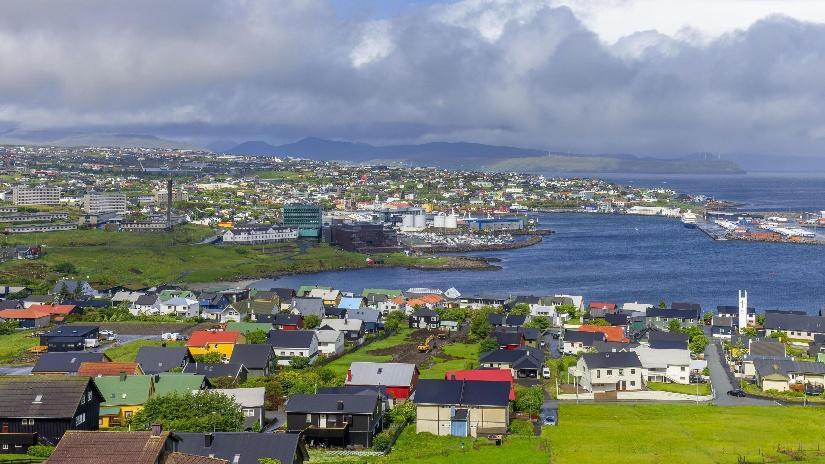
Faroe Islands: GETTY IMAGES
The parliament of the Faroe Islands voted on Thursday to legalise abortion until the end of the 12th week of pregnancy, overturning a decades-old law that prohibited abortions in most cases.
Previous legislation allowed abortions only in certain circumstances – such as rape, incest or risk to the health of the pregnant woman – and meant the self-governing Danish territory had among the most restrictive abortion policies in Europe.
Following a heated parliamentary debate, the decision came down to the wire, with MPs narrowly voting in favour of the reform, by 17 to 16.
“This is truly an historic day in the Faroe Islands,” said Ingilín Didriksen Strøm, one of the four MPs who tabled the bill. Strøm told the BBC: “This change finally affirms women’s autonomy over their own bodies in the Faroe Islands.”
“It guarantees access to safe healthcare, and it also protects our freedom to make decisions about our own lives without fear, without stigma and without criminalisation,” she added.
The new legislation in the Faroe Islands – which are located between Scotland and Norway – is expected to come into effect on 1 July 2026, replacing laws dating back to 1956.
Under that legislation, abortions could only be performed in special circumstances – which also included if there are severe fetal health problems or if the woman is deemed “unfit” to care for the child.
Whether a woman is “unfit” or not is judged first by a GP, and then a second medical body, before an abortion is granted. Both the woman and the doctor risked imprisonment if the conditions were not met.
Faroese pro-choice campaigners have argued the legislation was outdated and impinged on women’s rights.
“This is a colossal change,” Bjørt Lind from pro-choice campaign group Fritt Val told Danish newspaper Politiken.
“Abortion has been so hidden and taboo in Faroese society. When we started our work, no one dared to talk about it. It has gotten much better,” she says. “But it’s still a huge challenge.”
In a statement to the BBC, Amnesty International’s Faroe Islands branch said: “After years of campaigning we finally have a law respecting women’s and all pregnant people’s rights to a safe and legal abortion until week 12. This is a huge step for human rights, the right to bodily autonomy and to secure safe abortions,” it added. “And Faroese women don’t have to go on an expensive trip abroad to have an abortion.”
With limited access to abortions in the Faroe Islands, campaign groups said women often had to travel to Denmark for the procedure.
Danish law has allowed abortion up to 12 weeks since 1973, and in June this year, that was amended to allow terminations on request until 18 weeks.
According to the Centre for Reproductive Rights, some 43 countries in Europe allow “abortion on request” during the early stages of pregnancy. Only five – Andorra, Malta, Liechtenstein, Poland and Monaco – maintain highly restrictive laws.
Erhard Joensen, an MP who voted against Thursday’s bill, told Danish national broadcaster, DR, that he respects the result, but does not believe there is much support for the new law. “I think we will see that some will try to roll it back,” he said.
The remote archipelago is home to around 56,000 people, who speak Faroese and have a distinct cultural identity.
Compared to other Nordic countries, society in the Faroe Islands is considered relatively conservative, with more than three quarters of the population members of the Lutheran church.
Previous attempts to liberalise the abortion law have failed. Most recently, in May last year, an almost identical bill resulted in a tied vote, failing to secure the majority required to pass the Faroese parliament.
SOURCE: Faroe Islands scraps one of Europe’s strictest abortion laws – BBC News. by Adrienne Murray. 5 December 2025.