


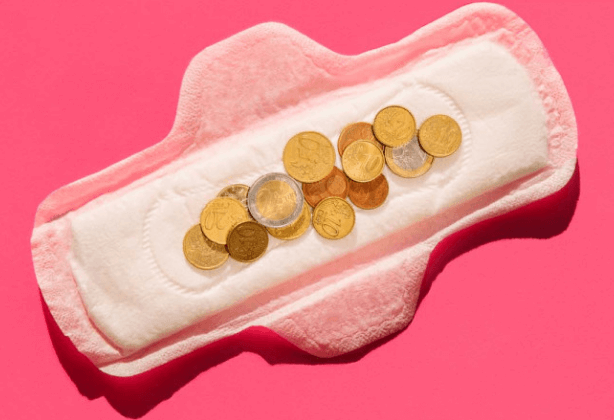
After nearly four years of legal proceedings, the Supreme Court has ruled in favour of removing tax on sanitary pads. The ruling follows a writ petitioned in August 2021 by two students at the Kathmandu School of Law, in a significant step towards menstrual equity in Nepal. The duo had petitioned the court to eliminate the tax on sanitary pads, arguing for their classification as essential goods rather than luxury items.
During the initial hearing on August 12, the court directed them to collect written responses from the four relevant ministries: the Ministry of Finance; the Ministry of Women, Children, and Senior Citizens; the Ministry of Law, Justice and Parliamentary Affairs; and the Ministry of Health and Population.
Kishor Bartaula, director of the Policy and Operation Division at the Department of Customs, said that imported sanitary pads currently carry a total tax of 18 percent— 5 percent customs duty and 13 percent Value Added Tax (VAT). According to the Department, Nepal imported 213 million sanitary pads worth Rs1.33 billion in the last fiscal year, generating Rs251.20 million in tax revenue.
Previously, for more than a decade, the government levied 15 percent customs duty, 13 percent VAT, and an additional 1.5 percent VAT on customs duty for sanitary pad imports. Despite calls for reform, these rates had remained largely unchanged.
In response to growing pressure from women’s rights activists, the government reduced customs duty on finished sanitary pads from 15 percent to 1.5 percent, and on raw materials from 15 percent to 1 percent, in the fiscal 2022–23 budget. Advocates for accessible menstrual hygiene argue that the government can afford to forgo the revenue generated from taxing these products. They stress that menstrual products should be categorised as essential goods—similar to medicines, contraceptives, and medical supplies, which are exempt from VAT.
Menstrual hygiene is not just a health issue but also an educational and economic one. Poor menstrual hygiene often contributes to school dropouts and reduced workplace productivity.
Globally, activists have urged governments to scrap taxes on menstrual products to combat period poverty—defined as a lack of access to safe and hygienic menstrual materials. In Nepal, many women and girls, particularly in rural areas, face challenges due to limited awareness, high costs, and social stigma related to menstruation. The Covid pandemic further exposed these inequalities.
Internationally, several countries have already moved in this direction. India eliminated its 12 percent tax on sanitary products in July 2018. The Maldives followed in December 2018 by exempting all menstrual products from tax. The same year, Colombia’s Constitutional Court struck down a 5 percent tax on menstrual products, labelling it unconstitutional, and mandated free distribution of such products to homeless women in Bogotá. In 2020, Scotland passed a bill to provide menstrual products free of charge to anyone who needs them.
The Supreme Court’s recent decision is a milestone in Nepal’s efforts toward menstrual equity and improving women’s health and dignity, according to experts.
SOURCE: Kathmandu Post. 21 June 2025. VISUAL: Shutterstock.