


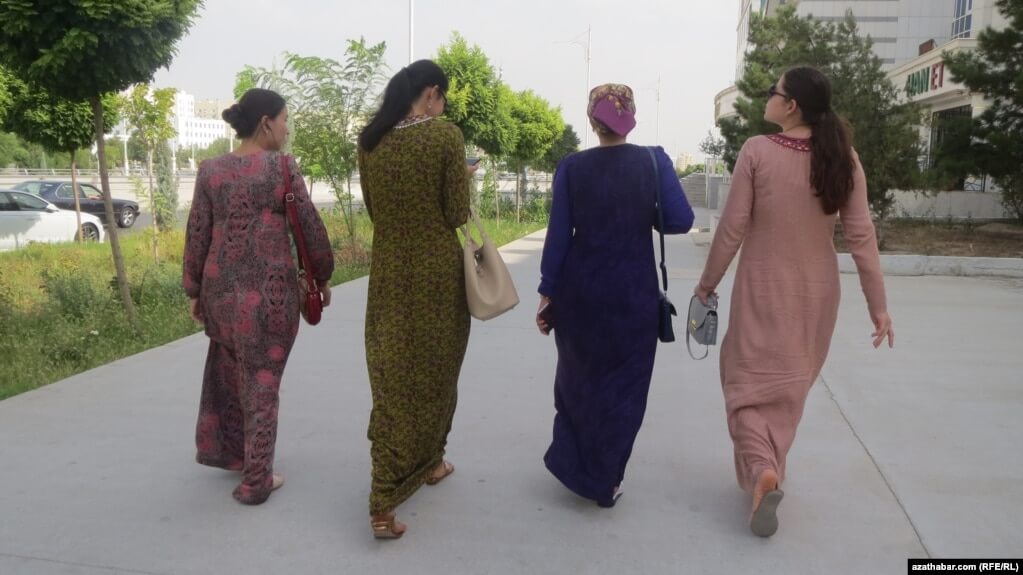
Medical sources in Turkmenistan say officials continue to limit women’s access to abortion
Azathabar.com (Radio Free Europe/Radio Liberty)
Medical sources in Turkmenistan say officials continue to limit women’s access to abortion, threatening doctors who perform them and denying women a consultation to discuss their options for unwanted pregnancies. Several health-care workers in Turkmenistan told Radio Free Europe/Radio Liberty (RFE/RL), on condition of anonymity, that doctors were warned that performing an abortion will cost them their license, even if the procedure was carried out within the limits specified by law.
“After getting warnings from the Health Ministry and law enforcement agencies, doctors are immediately turning away women who come to inquire about an abortion. They are not even being given doctor’s appointments,” an Ashgabat physician said on August 20.
Health-care workers said doctors are only allowed to terminate a pregnancy when the fetus shows no signs of life inside the womb. Authorities also strictly control how doctors prescribe abortion pills to patients. The medics said the clampdown on abortion is forcing women to resort to unsafe options, putting their lives at risk. It has also paved a way for bribery as some medics continue to carry out abortions secretly for large sums of money. The sources spoke on condition of anonymity fearing reprisals by the authoritarian government.
RFE/RL cannot independently verify the claims. Turkmen officials did not respond to our requests for comment.
Turkmenistan unveiled a law in 2022 that permits terminating a pregnancy without a medical reason within the first five weeks. Previously, the period during which women were allowed to terminate an unwanted pregnancy without a health reason was 12 weeks. The law on the Protection of Public Health also stipulates that terminating a pregnancy could be allowed at up to 22 weeks for “social” or “medical” grounds if the “medical advisory commission” concludes that such reasons are applicable. The law doesn’t explain the “medical and social” reasons or the makeup of the advisory commission. After 22 weeks of gestation, the pregnancy can only be terminated for health reasons based on the decision of a specially established council of doctors, the law says. In reality, however, “authorities don’t even take into consideration the exemptions that the law allows,” a Turkmen doctor told RFE/RL.
An overly restrictive reproductive health framework in Turkmenistan is contributing to societal dysfunction, rights advocates contend.
Turkmenistan’s population growth rate has been stagnating in recent years, falling to its lowest level (1.84 percent) in 2023 since the hardship years following the Soviet Union’s breakup in the 1990s. A decade ago, the growth rate stood at 2.29 percent. The country’s authoritarian-minded leadership is resorting to draconian policies to force women to have more babies out of an apparent desire to bolster population growth.
Access to reproductive health information is limited in the country, and only an estimated 47 percent of women are using contraceptives. Since the adoption of amendments in 2015, abortion is legal in Turkmenistan only up to the fifth week of pregnancy—a timeframe before many women even know they are pregnant. The five-week limit is the lowest in the world.
Legal statutes also permit abortions for “social” reasons until the 22nd week of pregnancy, and for “medical” reasons after the 22nd week. But the statutes are vague in defining criteria for social and medical abortions, and the law also specifies the final decision is up to state medical commissions that are institutionally reluctant to approve procedures.
“Abortions are a deeply personal and culturally taboo topic. Restricted access to them deepens social and economic gender inequality,” Aynabat Yaylymova, founder of the Progres Foundation, a US-based non-profit, advocating for public health literacy and human rights in Turkmenistan.
“If women had the freedom to control their bodies and make decisions about childbirth, they’d manage contraception better. But they don’t,” added Yaylymova, answering questions posed by Eurasianet. “They lack freedom, education, and financial independence. No one listens to them. They have no information, no chance to understand, choose, or plan their lives.”
In practice, legal abortions are very difficult to obtain. Only 76 gynecologists are certified to perform abortions in the country with an estimated population of over 7.4 million. RFE/RL reported in 2024 that officials issued informal instructions to medical clinics banning abortions. Doctors who perform an abortion outside of the state framework are subject to criminal prosecution.
“Turkmenistan’s restrictive abortion laws also increase vulnerability” to instances of domestic abuse, stated a report compiled in early 2024 by a coalition of non-governmental organizations, published under the auspices of the UN Convention for the Elimination of Discrimination against Women (CEDAW). “Unwanted pregnancy and denial of abortion may subject victims of sexual violence to not only physical and mental suffering but also further stigmatization and isolation.”
Amnesty International in its 2024 overview of Turkmenistan cited a survey showing that one in eight women in Turkmenistan were subjected to physical and/or sexual violence by an intimate partner. A study published by the UN Population Fund, meanwhile, stated that “approximately 1 out of every 3 women who experience physical and sexual abuse or violence from their partner resort to abortion.”
Abortions are still being performed in Turkmenistan, and in significant numbers. The NGO report for CEDAW, for example, noted that 83 percent of unintended pregnancies, or almost 29,000, ended in an abortion between 2015-2019.
A Turkmen medical professional told the Progres Foundation that ‘they’ presently perform 20-25 unofficial abortions monthly. “Statistics are skewed to meet government demands, with distorted figures and reasons,” the medical professional said, adding that many patients are uneducated housewives who already have multiple children.
“There’s no data, but it seems these are the women who seek abortions the most. The main reason is unplanned pregnancy. Women don’t know about contraception or can’t access it. Men don’t use condoms,” the medical professional said. “The burden of preventing pregnancy falls on women.” According to RFE/RL, illegal abortions can cost up to $14,000. Given the cost, many women, especially in rural areas, resort to dangerous options.
“We have no official reports of deaths from unsafe abortions or underground cases. Women with money can pay for abortions themselves or through partners. Poor, uneducated, or large families suffer most,” Yaylymova said. The economic toll is substantial. The restrictive abortion regime, combined with limited access to education and job opportunities, leave most Turkmen women on the economic margins of society. “Women and girls born in the last 33 years will fare worse than their Soviet-era mothers and grandmothers. The reality is grim: women and children are the most vulnerable,” Yaylymova says.
SOURCE: Radio Free Europe/Rado Liberty (RFE/RL), by Farangis Najibullah in Prague and RFE/RL Turkmen Service correspondents in Turkmenistan, 2024. [Weblink has disappeared!]
+ + +
Challenges in Maternal Health, Gender-Based Violence, and Fertility in Turkmenistan:
UNFPA Consultancy Announcements
UNFPA has announced three international consultancy vacancies that spotlight pressing demographic and social challenges in Turkmenistan. These roles aim to support national efforts in strengthening maternal health protocols, addressing gaps in legislation on gender-based violence, and understanding declining fertility trends. Together, they reflect the country’s urgent need for data-driven, rights-based policy solutions to improve reproductive health, gender equality, and long-term demographic resilience.
Improving maternal health
Despite Turkmenistan achieving a remarkably low maternal mortality ratio (MMR) of 5 per 100,000 live births, sustained progress in maternal health remains a priority. While this is well below the global SDG target of 70 per 100,000 by 2030, outdated clinical protocols pose a risk to maintaining and improving this success and further eliminating preventable maternal deaths.
Medical knowledge and WHO guidelines continue to evolve, and failure to regularly update clinical practices can compromise care quality, hinder effective response to obstetric emergencies, and limit healthcare workers’ capacity to provide optimal maternal and neonatal outcomes. This makes it essential to align national protocols with the latest international standards.
To address this, UNFPA is recruiting an international consultant to revise and update clinical protocols in obstetric health in partnership with Turkmenistan’s Ministry of Health and Medical Industry (MoHMI). The goal is to contribute toward eliminating preventable maternal deaths, enhance evidence-based practice, and ensure Turkmenistan’s maternal healthcare system remains resilient, modern, and effective. The expert will assess existing protocols and identify gaps, lead capacity-building sessions and revise key clinical protocols, including for C-sections, obstetric hemorrhage, miscarriage, and vacuum extraction and analyze outcomes and draft a report with relevant policy recommendations. The consultant will also deliver onsite trainings and workshops for doctors and stakeholders to ensure effective implementation.
Demographic change and the need to understand fertility aspirations in Turkmenistan
Turkmenistan, home to over 7 million people, is undergoing important demographic changes. The median age is 30, and the dependency ratio is 39.7%, meaning there are about 40 dependents (children and older adults) for every 100 people of working age (15-64). This relatively low dependency ratio indicates a large and potentially productive workforce, offering a window of opportunity known as the demographic dividend – a phase where economic growth can accelerate if jobs, education, and services are in place.
However, this advantage may be short-lived. The total fertility rate has declined from 3.2 to 2.6 over the past decade and continues to fall. In 2023, the birth rate was 22 and the death rate was 6 per 1,000 persons. According to the 2022 Census, 57% of the population is of working age, 34.9% are under 15, and 8.1% are 65 or older. Life expectancy is 70 years, and the population growth rate has increased slightly from 1.3% to 1.8% annually.
Looking ahead, the working-age population is projected to grow by nearly 1 million by 2050, while the share of children will decline and the elderly population is expected to double to 15%. These trends reflect a shift toward ageing and lower fertility, both of which can place growing pressure on healthcare, pensions, education, and labor markets.
Although fertility remains above replacement level, its steady decline – coupled with a growing elderly population – poses serious long-term risks for socio-economic development and demographic resilience. Yet, Turkmenistan lacks recent, detailed data on fertility preferences and the reasons behind this decline. There is limited understanding of:
-How many children people want and when
-Why actual fertility is falling below desired levels
-How social, economic, health, and gender-related factors influence decisions
Without this information, national planning in healthcare, education, social protection, and labor remains reactive rather than strategic. Understanding fertility aspirations is essential to:
-Guide evidence-based policy on family planning, gender equality, and youth support,
-Develop a national demographic resilience strategy, and
-Help Turkmenistan harness its current demographic opportunity and prepare for future ageing.
To address this challenge UNFPA is recruiting an international consultant. The expert will review existing data including the 2022 census, design culturally adapted survey questionnaires, develop training materials and train national partners (Ministry of Health, Statistics Institute, CSOs, academia) on survey execution, analyze survey results, prepare and present analytical reports with key findings and policy recommendations.
A consultant on gender-based violence will also be recruited.
SOURCE: Progres. 24 July 2025