


Introduction
Evidence from abortion opinion surveys (2021 to 2023) from a diverse sample of respondents from India offers a glimpse into the national perspective. These surveys primarily focus on whether abortion should be legal — with the most recent data of 2023 showing 59% of Indians in support.
Objectives
- To understand people’s opinions on abortion;
- To understand people’s attitudes towards abortion and decision-making around abortion
- To explore any patterns in these opinions across different demographic parameters;
- To establish an opinion benchmark through this survey and conduct future rounds periodically to track trends.
However, this focus does not fully capture the range of other critical aspects like individual comfort levels discussing abortion, societal acceptance, and the importance placed on women’s autonomy in decision-making regarding their reproductive choices.
Method
We used a cross-sectional design for the survey. A multilingual tool was used to gather data from adults (18+years); participation was voluntary. We used a convenience sampling approach for the survey. The online tool was distributed through WhatsApp, LinkedIn, and Telegram, while IDF youth leaders were deployed for offline data collection (mostly) in rural areas. The structured questionnaire included five demographic questions and four questions assessing opinions and attitudes towards abortion. No personal identifiers were collected, and informed consent was obtained for the survey.
We obtained a total of 13,255 responses, among which 51% were obtained online, and the rest were through offline mode using self-administered paper-based questionnaires.
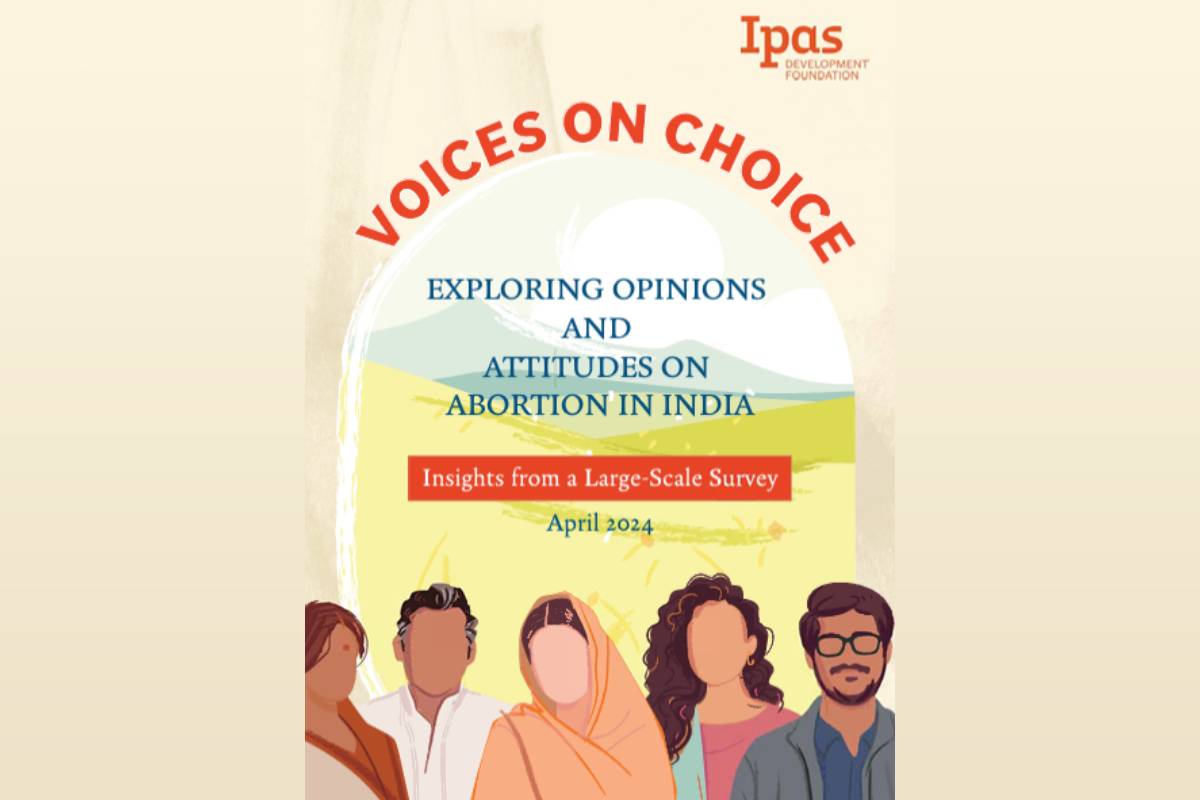
Ipas Development Foundation (IDF) aimed to bridge the evidence gap in public opinion surrounding abortion in India. We conducted the nation’s first large-scale survey designed to explore these personal views. We will conduct multiple rounds of the survey over the years, especially if there are any major policy changes, to understand longitudinal trends in opinion. This report from the first round goes beyond the legality of abortion. It examines people’s comfort levels in discussing abortion, perceptions of societal acceptance, and a woman’s right to decide. By revealing these diverse perspectives, the survey offers a more nuanced understanding of public opinion on abortion in India.
We used a cross-sectional design for the survey. A multilingual tool was used to gather data from adults (18+years); participation was voluntary. We used a convenience sampling approach for the survey. The online tool was distributed through WhatsApp, LinkedIn, and Telegram, while IDF youth leaders were deployed for offline data collection (mostly) in rural areas. The structured questionnaire included five demographic questions and four questions assessing opinions and attitudes towards abortion. No personal identifiers were collected, and informed consent was obtained for the survey.
Demographic profile of respondents
Our survey drew responses from a geographically diverse group with 75% of respondents living in rural areas. Majority of the participants held a higher secondary education qualification (23%), followed by graduates (21%), while 4% reported no formal education. The age range was diverse, and encompassed individuals of 18 years to over 46 years of age.
Support for abortion
With the majority (72%) saying that abortion should be allowed in the country, there exists strong support for abortion among the surveyed population. Only 1/3 did not favor abortion and 11% of the respondents were unsure. These findings highlight the diverse and complex landscape of public opinion on abortion in the country. This is similar to the findings of other global level opinion surveys.
A significant majority, 71%, have a positive attitude towards abortion. Interestingly, this decreases to 62% when it comes to abortion for an unmarried person. In terms of conversational comfort, 70% of respondents feel at ease discussing abortion with friends, while 65% report similar comfort levels when discussing it with family members.
Agency on abortion
Findings reveal that only 29% of the respondents believe that women should be the primary decision-makers for undergoing an abortion. This insight prompts the need for a deeper exploration of the factors shaping these perceptions. An interesting dynamic unfolds for gender. While women are comparatively more supportive of women’s autonomy in decision-making, 68% of women and 75% of men disagree with women being the primary decision-makers. Age did not significantly influence the views on abortion decision-making, while people from rural areas are less likely to view women as the sole decision-makers for abortion. Finally, individuals with higher education levels, particularly those with postgraduate degrees and above, are much more likely to support women as primary decision-makers. This reinforces the notion that education fosters a deeper understanding of bodily autonomy and women’s rights to make choices about their bodies and health.
The report closes with suggestions for shaping public opinion on abortion. First, by focusing on key groups (younger individuals, those without formal education, and men). Second, featuring empowered allies in social media campaigns and hosting learning workshops can help mould them into ‘champions’ for reproductive rights, and initiate conversations in everyday spaces. Third, understanding the nuances by conducting further research employing qualitative, quantitative, and mixed methods approaches to delve deeper into the complexities of attitudes on abortion and women’s agency. This comprehensive understanding will inform more effective advocacy efforts and interventions.
SOURCE: Ipas Development Foundation, New Delhi, India. https://www.ipasdevelopmentfoundation.org/wp-content/uploads/2024/08/Abortion-Opinion-Survey_Report_2024.pdf E-mail: idf@ipas.org